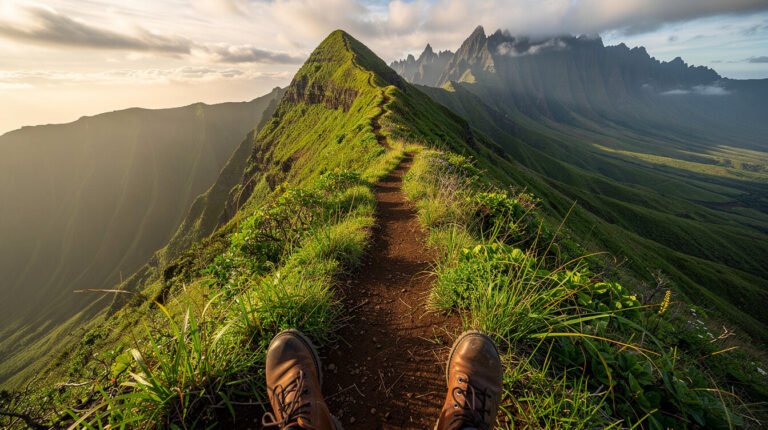
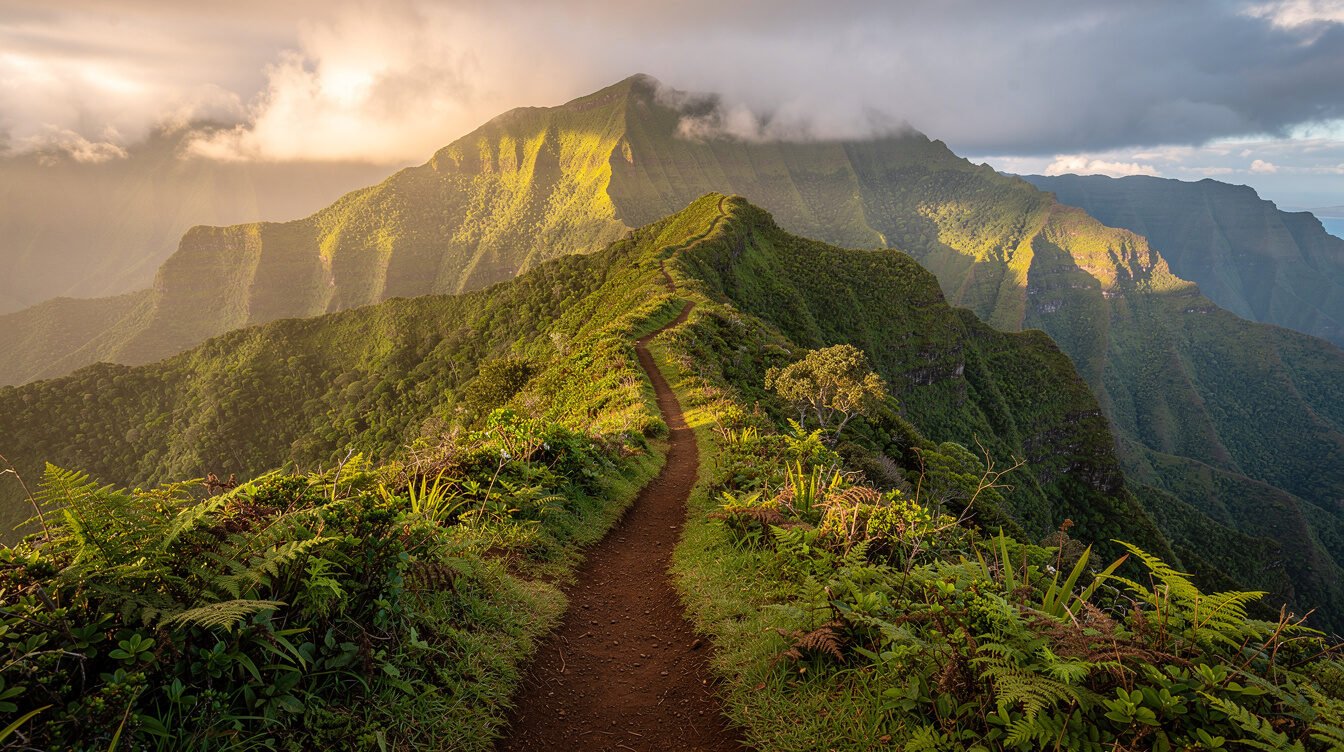
Best Hikes on Kauai, Ranked by Who Should Actually Attempt Them
Everybody who’s been to Kauai has an opinion about the best hikes there, and most of that opinion comes from a list that puts an 11-mile permit-only trail right next to a stroller-friendly ridge walk like they’re the same kind of afternoon. They’re not. Best hikes Kauai searches deserve an honest answer, not a highlight reel, so here’s the ranking we’d actually give a cousin flying in next week: what’s genuinely worth your time, what requires a permit you don’t have yet, and what can get you into real trouble if you treat Kauai’s weather like a Waikiki afternoon.
This is the wettest of the main Hawaiian Islands by a wide margin — Mount Waiʻaleʻale near the island’s center is one of the rainiest spots on Earth — and that fact changes everything about how you should plan a hike here. Trails that look tame in a photo taken on a dry Tuesday can turn into a different hike entirely by the time you show up on a wet Thursday. So we’re ranking by skill level and permit reality first, epic-views second. A trail that’s genuinely great but requires a permit you didn’t apply for three months ago doesn’t help you this weekend, and a “moderate” trail that quietly means “narrow cliff edge, bring trekking poles” doesn’t help the family with young keiki either.
How We Ranked These Kauai Hikes (Skill Level and Permits First)
Most “top Kauai hikes” lists sort by scenery alone, which is how you end up with a world-famous, permit-required backcountry trail sitting one slot above a paved nature loop. That’s not a ranking, that’s a slideshow. We sort by three things, in this order:
- Can you actually do it this trip? — no permit, no reservation, no six-month waitlist standing between you and the trailhead.
- What’s the real skill and fitness level required? — not “moderate” as a catch-all, but cliff edges, stream crossings, and mud called out specifically, so you know before your boots are already wet.
- Is it honestly worth the effort — views, payoff, and whether a tour company is trying to sell you a “hike” that’s actually a paid add-on wearing a hiking-blog headline.
A trail that’s permit-free, well-marked, and genuinely rewarding beats a trail that photographs better but needs paperwork you don’t have. That’s the whole logic behind #1 below, and it’s also why the Kalalau Trail — genuinely one of the most beautiful coastal trails on Earth — doesn’t open this list. Beautiful and accessible-this-weekend are two different questions, and we’re answering both instead of only one.
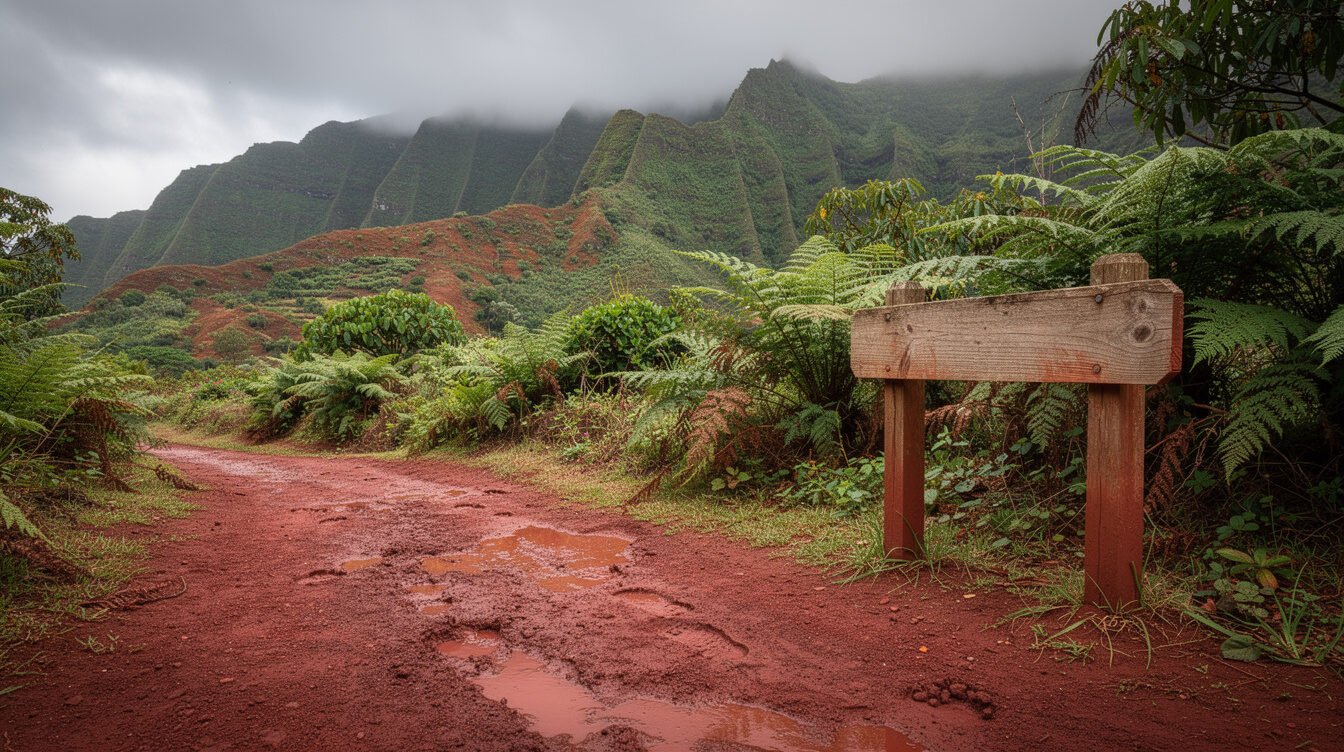
One more thing worth knowing going in: Kauai’s red dirt stains everything it touches, permanently. Wear trail shoes you don’t mind sacrificing, not the white sneakers from your flight over. It’s practically an island tradition at this point — you can spot a first-timer’s rental car by the state of the floor mats.
We’re also not ranking trails that cross clearly marked private property, cut through areas with posted cultural or archaeological significance, or require trespassing to reach a “secret” spot some blog swears is worth the risk. Kauai has real wahi pana — storied, significant places — woven through its landscape, and plenty of that land is either kapu (restricted) or simply private. If a trail isn’t legally and respectfully open to the public, it doesn’t belong on this list no matter how good the photo looks.
#1: Kuilau Ridge Trail — The Best All-Around Hike on Kauai
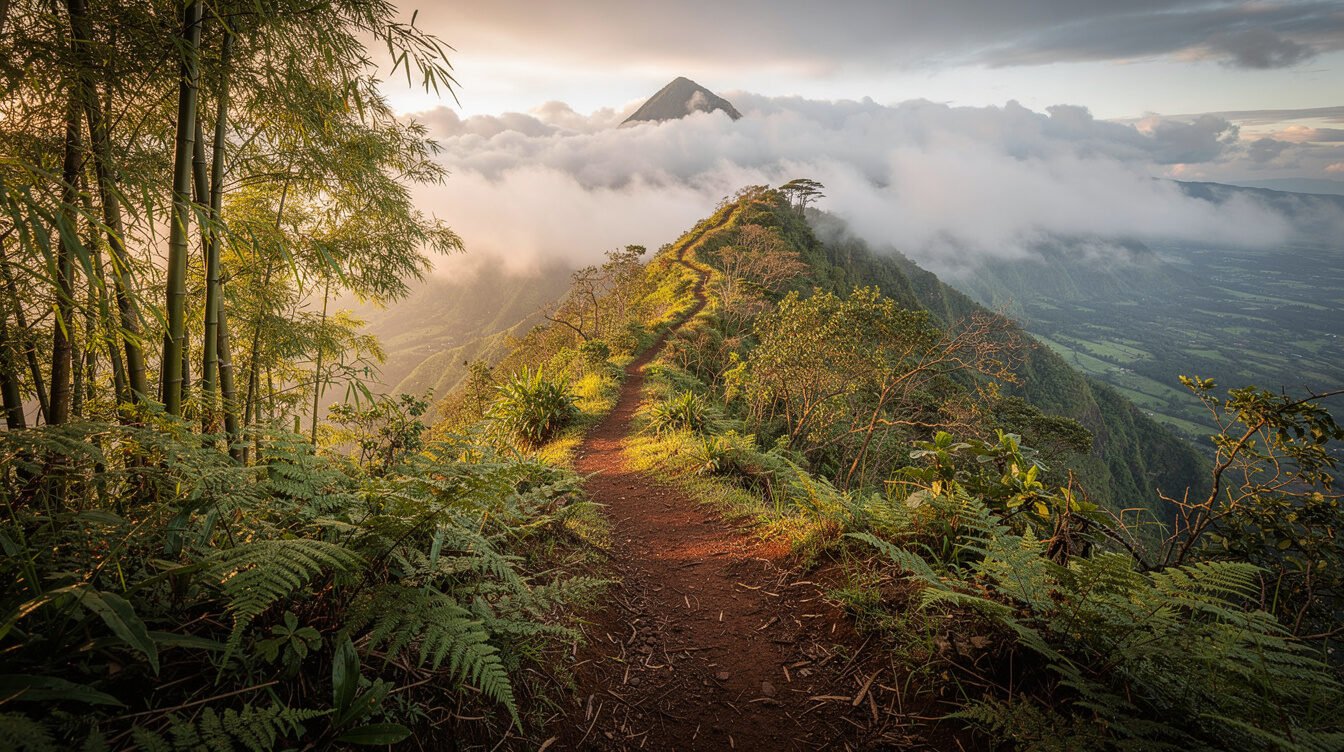
No permit, no reservation, no fee, and it’s genuinely one of the best views on the island — that’s why Kuilau Ridge Trail takes #1. It’s a moderate 4.4-mile round trip (roughly 650 feet of elevation gain) through misty forest and open ridge that opens up to a wraparound view of Mount Waiʻaleʻale on a clear morning, which on Kauai means “get there early, before the clouds build in.”
The trail is well-graded, has a couple of covered picnic shelters partway up if the rain catches you — and on Kauai, it usually will, at least briefly — and doesn’t demand technical skill, just decent shoes and a tolerance for red mud, which is basically a rite of passage here. It’s kid-friendly for older keiki, dog-friendly on leash, and popular enough that you won’t be hiking it alone, which matters on an island where cell service disappears fast once you’re in the trees.
If two miles up and back isn’t enough, Kuilau Ridge connects to the Moalepe Trail, which continues on through pasture land toward Olohena — turn it into a longer out-and-back if the legs are willing. Parking is roadside and fills up by mid-morning on weekends, so this is a trail that rewards an early start whether or not you care about the clouds.
Why #1 beats #2: everything else on this list either requires a permit, a reservation, or a level of fitness and exposure that rules out a real chunk of visitors. Kuilau Ridge doesn’t ask you for any of that and still delivers a payoff most day hikers on the island never see.
#2–#4: Solid Kauai Hikes, Ranked by Who They’re For
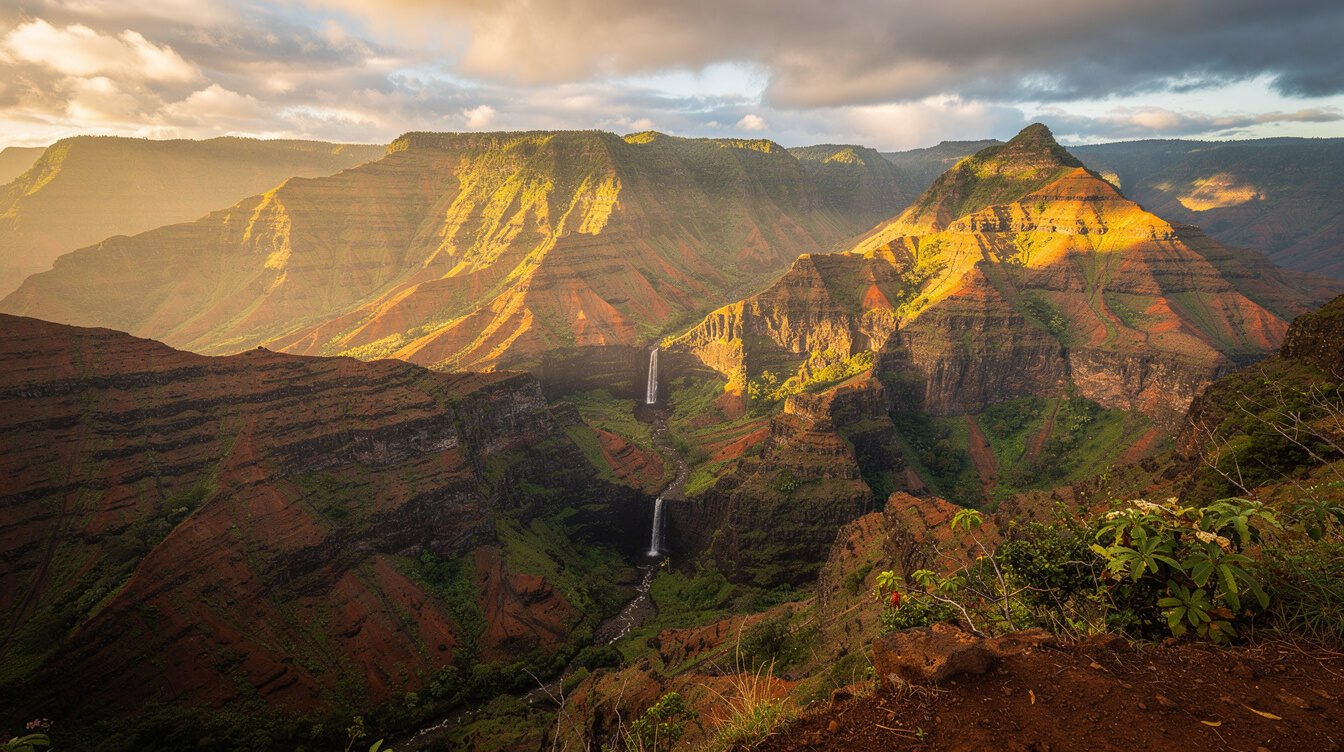
#2 — Canyon Trail to Waipoʻo Falls (Kōkeʻe / Waimea Canyon State Park). A moderate 3.5-mile round trip that ends at an overlook of an 800-foot waterfall dropping into what Mark Twain reportedly nicknamed the “Grand Canyon of the Pacific” — red, green, and orange canyon walls stacked for miles. Heads up: Waimea Canyon and Kōkeʻe now run a paid parking reservation system for non-resident vehicles, so book that before you drive up — it’s a reservation, not a hiking permit, but skip it and you’ll be turned around at the gate before you ever lace up. Go early; the canyon fills with cloud by early afternoon most days.
#3 — Nounou Mountain (Sleeping Giant) East Trail. A moderate 3.5-mile round trip up a ridge locals nicknamed for the giant silhouette it forms against the skyline from the Wailua/Kapaʻa side. No permit, no fee, a popular sunrise hike with locals as much as visitors, and steep enough in the last stretch that it earns its “moderate-to-strenuous” label — good boots, not flip-flops, and trekking poles help on the way down.
#4 — Awaʻawapuhi Trail. This one’s for hikers who actually want strenuous: a 6.5-mile round trip along a narrow ridge with real drop-offs on both sides, ending at a cliff-edge view straight down the Nāpali Coast that most visitors never get from any road. No permit required, but this is not a trail for anyone uneasy with exposure, and the “easy” downhill start on the way out means a genuinely tough climb back up on the way home — pace yourself and carry more water than you think you need.
Any of these three can reasonably swap order depending on what you’re after — Waipoʻo Falls if you want a waterfall payoff and don’t mind planning the reservation, Sleeping Giant if you want a sunrise view close to Kapaʻa, Awaʻawapuhi if fitness and exposure aren’t a concern and you want the most dramatic coastal view of the four.
What to actually pack for these trails
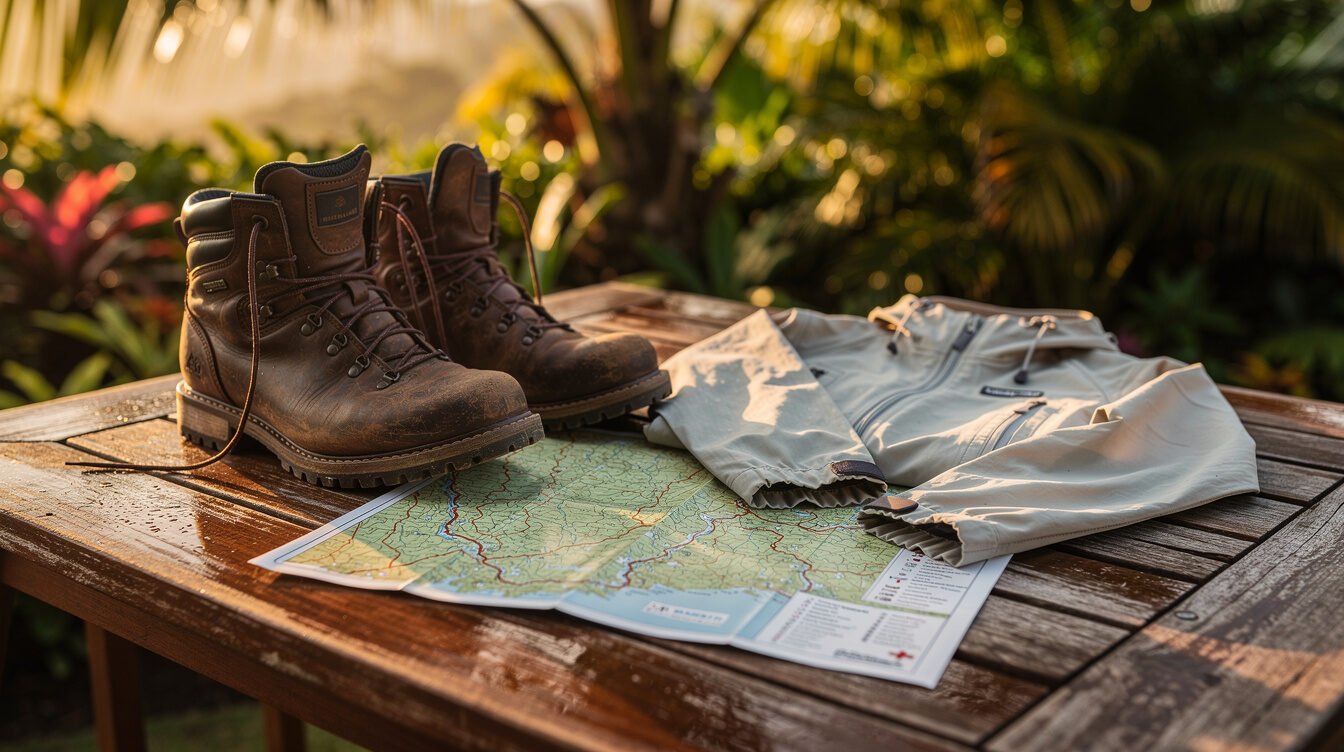
Kauai punishes underprepared hikers more than the other islands, mostly because the weather turns faster than people expect. A short packing list that covers all four hikes above: trail shoes with real tread (not just running shoes — the mud gets slick), a light rain shell even if the forecast looks clear at the trailhead, more water than you’d carry on a similar mainland hike, a printed or downloaded offline map since cell service drops out fast once you’re in the trees, and a headlamp if there’s any chance you’re still out past dusk. None of this is exotic gear — it’s the difference between an uneventful hike and one that ends with a phone call to search and rescue.
The Honest Truth About the Kalalau Trail
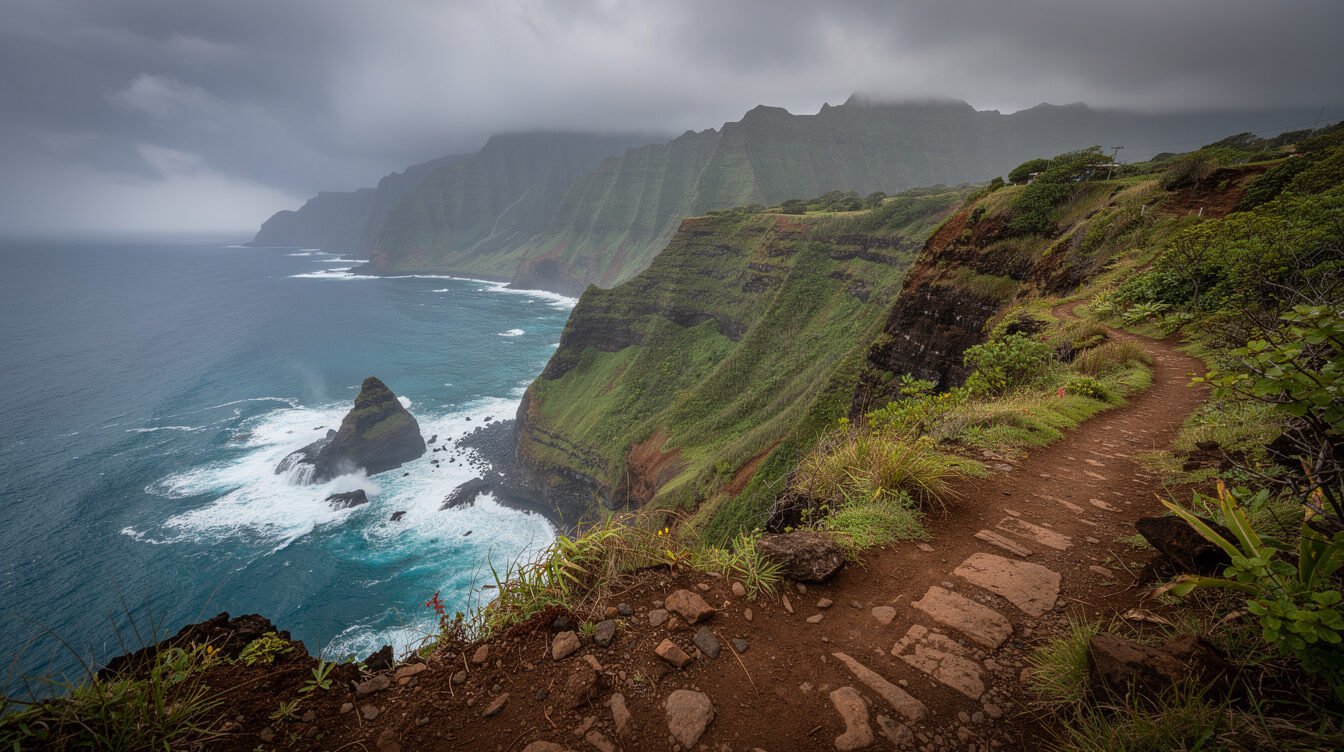
The Kalalau Trail gets recommended constantly, and most lists drop it right next to a beginner nature walk with zero context. We’re not doing that. Kalalau is an 11-mile one-way trail along the Nāpali Coast, and here’s what actually matters before you consider it:
- The first two miles, to Hanakāpīʻai Beach, are open to day hikers without a permit — and even that stretch climbs and drops along exposed cliffside sections, plus a stream crossing that turns genuinely dangerous during rain.
- Anything past Hanakāpīʻai — including the side trip up to Hanakāpīʻai Falls or continuing the full distance toward Kalalau Valley — requires a camping permit through Hawaiʻi DLNR, booked well in advance. There is no day-use permit for the back two-thirds of the trail; camping permit or turn around, no exceptions.
- The trail sees search-and-rescue calls most years, concentrated at that Hanakāpīʻai stream crossing during flash floods and at the narrow, exposed section hikers call Crawler’s Ledge, roughly six miles in, where the trail pinches to a foot or two wide with a straight drop to the ocean below.
- This is a backcountry trail for hikers with real trail experience, proper footwear, trekking poles, and a permit in hand — not a bucket-list photo stop squeezed into a half-day.
If you don’t have a permit and you’re not backcountry-ready, the honest move is Hanakāpīʻai Beach and back, on a dry day, turning around well before dark. That’s still one of the best two miles on the island, and it’s the version of this trail almost every visitor should actually take.
Flash Floods and Rain: The Kauai Trail Safety Nobody Skips
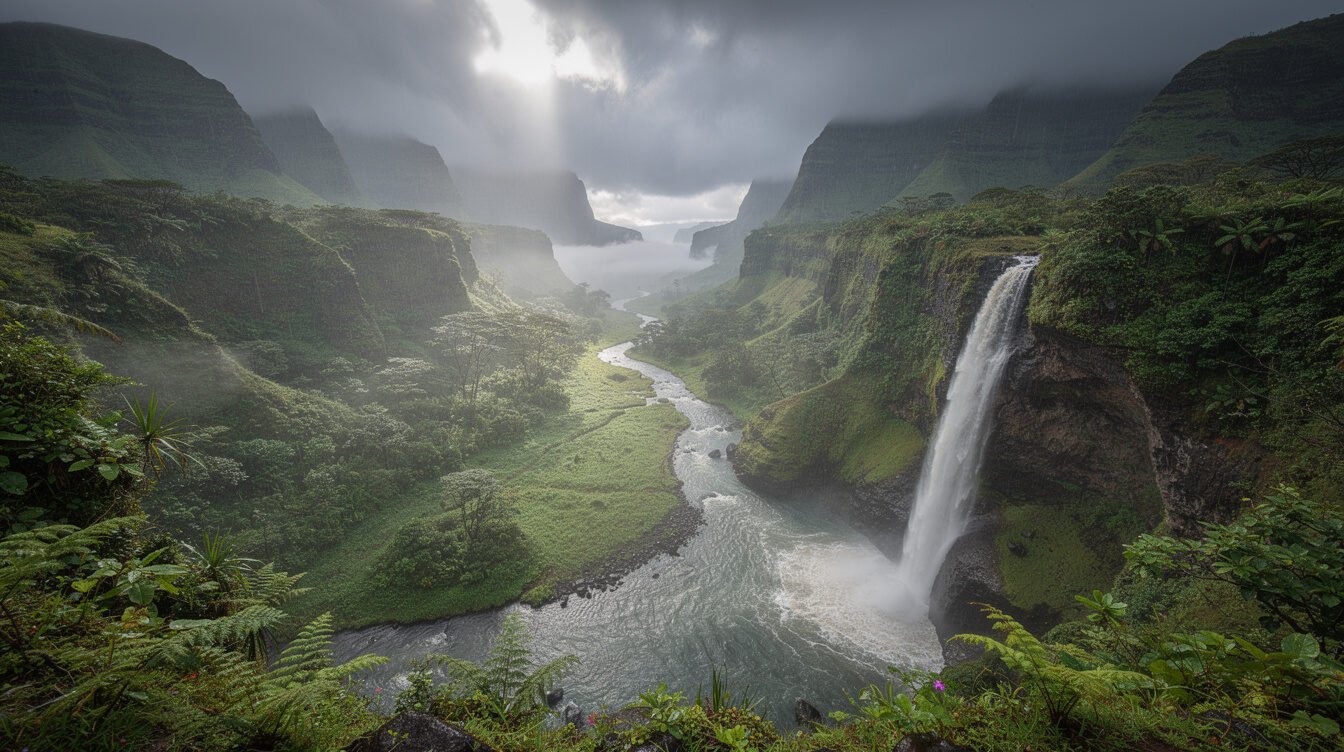
Kauai earns the nickname “the Garden Isle” because it rains — a lot, and fast. A stream that’s ankle-deep when you cross it in the morning can be a chest-deep, debris-carrying flow an hour later, with almost zero warning if you’re not watching the sky upstream. This isn’t a rare-event caution, it’s routine Kauai weather, and it’s the single biggest reason competitor hiking lists undersell the risk here compared to Oahu or Maui trail guides.
Before you go: check the National Weather Service flash flood outlook for Kauai that morning, not the week before — mountain weather here changes by the hour. If it’s rained recently or is actively raining, skip stream crossings entirely; that includes the Hanakāpīʻai crossing on the Kalalau Trail, which is where most of the serious incidents on this list of trails happen. If you’re already on trail and a stream starts rising, turning brown, or picking up branches and debris, turn around immediately and head for higher ground — don’t try to beat it across. No view is worth it, and locals will tell you the same thing without blinking twice.
A few practical habits that cover most of this island’s trail risk: tell someone your route and expected return time, start early so you’re off exposed sections before afternoon buildup, carry more water than a dry-climate hike would need, and treat any trail described as “usually fine” with a little extra caution the first time you’re on it.
Best time of year to hike Kauai
There’s no dry season here the way there is on leeward Oahu or West Maui — Kauai gets rain year-round, though summer months (roughly May through September) trend drier and more predictable than winter. Winter brings bigger, more frequent storm systems and higher flash-flood risk, especially on North Shore and interior trails like Kalalau and the approach to Waipoʻo Falls. None of that means skip a winter trip — it means build in a flexible day or two, check the forecast the morning of, and don’t lock a permit-only backcountry hike into your only full day on island.
Free Trail or Paid Tour? Know the Difference Before You Book
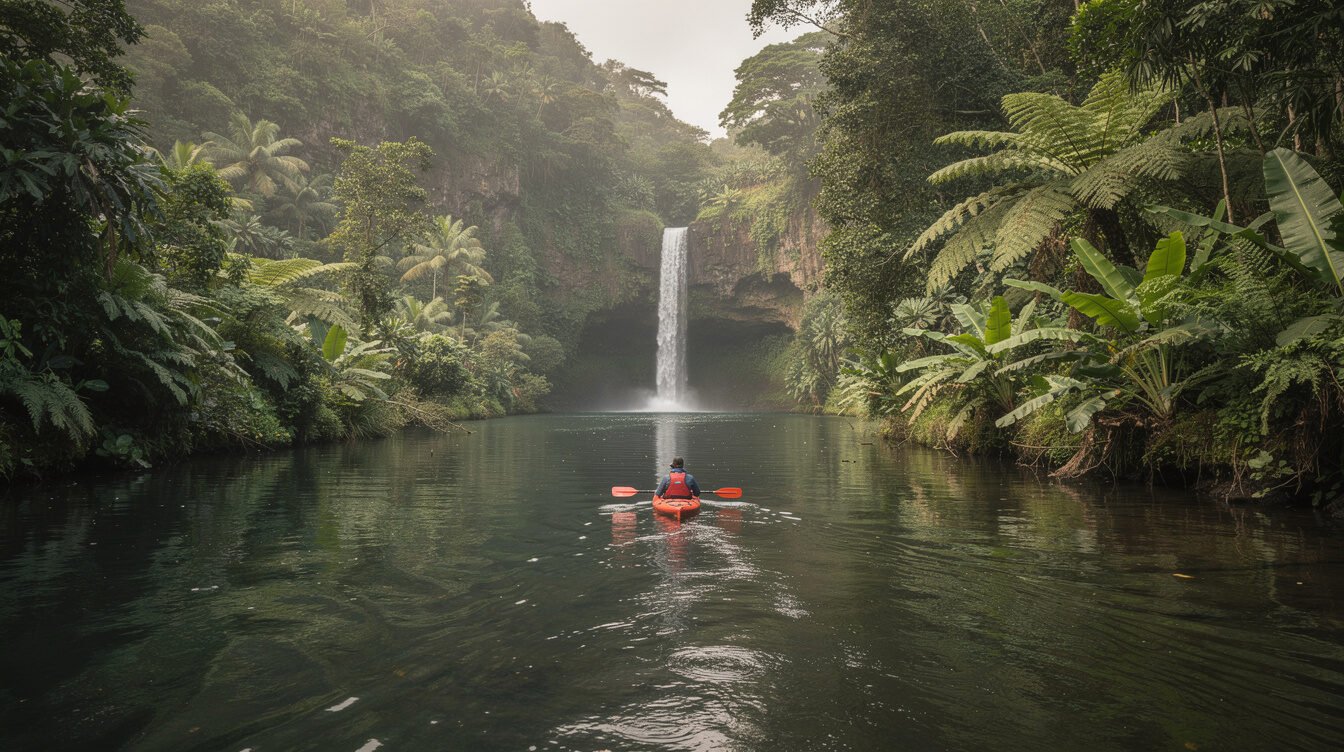
One thing that trips up visitors: a few of the “hikes” that show up in search results — most often the Wailua River “Secret Falls” trip to Uluwehi Falls — aren’t standalone free trails at all. That stretch of the Wailua River and the trail beyond it is only realistically reachable by kayak, and much of it runs through areas where you need either your own boat or a licensed tour permit to legally access. If a listicle folds that into a “top free hikes” ranking without mentioning the guided kayak tour, rental gear, and real dollar cost involved, that’s misleading — it’s a paid outing dressed up as a trail listing.
The same pattern shows up around a few other “hike to a waterfall” write-ups that are actually zipline-and-hike combo packages, or private-land access points that technically require a landowner’s tour to reach legally. None of that makes them bad — a guided river-and-waterfall day, or a zipline-plus-hike combo, can be genuinely fun. It just means going in with the right expectations and budget instead of assuming you can park at a trailhead and walk in for free.
Nothing wrong with booking any of these if that’s the day you want. Just go in knowing it’s a tour, not a free hike, so it doesn’t throw off your itinerary or your wallet when you find out at the counter.
FAQ: Best Hikes on Kauai
What’s the best beginner hike on Kauai?
Kuilau Ridge Trail. It’s graded for regular fitness levels, well-marked, no permit needed, and still delivers real mountain views without a technical section anywhere on the route.
What’s the best Kauai hike that ends at a waterfall?
Canyon Trail to Waipoʻo Falls, if you book the Waimea Canyon / Kōkeʻe parking reservation ahead of time. For a longer waterfall payoff with real permit and safety considerations, see the Kalalau Trail section above.
Do I need a permit to hike the Kalalau Trail?
Not for the first two miles to Hanakāpīʻai Beach. Past that point — including Hanakāpīʻai Falls and anything toward Kalalau Valley — yes, you need a camping permit from Hawaiʻi DLNR, and those book out well ahead of peak season.
Is Kauai hiking dangerous?
Most of the trails on this list are perfectly manageable with normal caution and the right footwear. The real, specific risk on Kauai is flash flooding at stream crossings — check conditions the morning of your hike, not the week before, and turn around if a stream is rising or discoloring.
Do I need a car reservation for Waimea Canyon?
Yes, for non-resident vehicles, as of the current reservation system covering Waimea Canyon and Kōkeʻe State Parks. Book it before your trip — it fills up, especially for sunrise and sunset slots.
What should I wear hiking on Kauai?
Trail shoes with real grip, not sandals or running shoes — the red-dirt trails get slick fast, wet or dry. Bring a light rain shell regardless of the forecast, and expect your shoes to come home a different color than they left.
Which Kauai hike has the best views for the least effort?
Kuilau Ridge Trail, hands down. Moderate effort, no permit, and a payoff view that rivals hikes twice the distance.
Final Thoughts: Go Prepared, Not Just Inspired
Kauai’s trails don’t need to be dressed up — a misty ridge with a view of Waiʻaleʻale, a canyon that earns the “Grand Canyon of the Pacific” name honestly, a coastline trail that demands real respect instead of a quick selfie. The only thing that ruins a Kauai hike is showing up without checking the rain, the permit, or the reservation system first. Get those three things right and every trail on this list delivers exactly what it promises.
Already planning the rest of the trip? We’ve also ranked the best beaches on Kauai and the best hikes on Maui, if you’re island-hopping this trip.
And if you want something to wear after you’re back down and cleaned up — red mud included — take a look through the shop.