Best Hikes on Maui, Ranked (Including the Permits Nobody Tells You About)
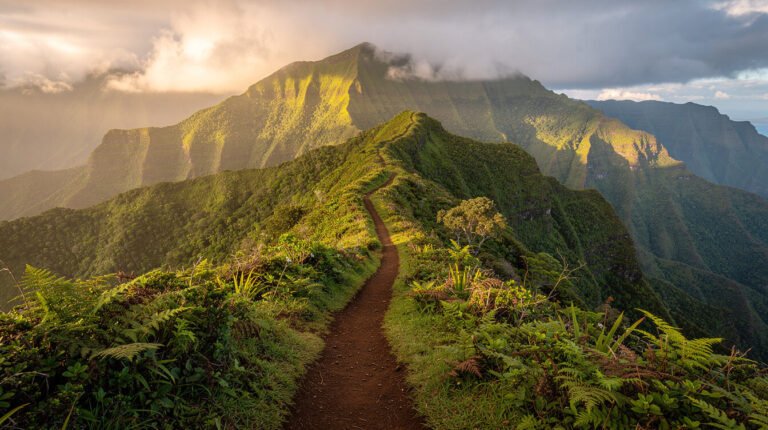
Ask five locals for the best hikes on Maui and you’ll get five different answers, a story about the parking situation, and at least one warning about a trail you saw on Instagram that isn’t actually worth your morning. That’s the thing tourist blogs miss — they rank by view count, not by whether the hike earns the drive, the mud, and the permit hassle nobody explains properly until you’re standing at a locked gate wondering why your reservation confirmation isn’t scanning.
We ranked these the way a local actually would: real trail-to-payoff ratio, how bad the crowds and parking really get, whether you need a reservation you don’t know about yet, and whether the hike respects the ʻāina it’s cutting through. No ten-hikes-in-one-day listicle padding. Just the ones worth your one good hiking day on Maui, in order, with the honest version of what to expect.
Most visitors get one, maybe two real hiking mornings on a Maui trip — the rest gets eaten by driving the Road to Hana, recovering from driving the Road to Hana, and deciding whether today is a beach day instead. So this list is deliberately short. Six trails, ranked, with the two that actually require paperwork explained in plain language, and an honest call on which “must-do” you can skip.
How we ranked the best hikes on Maui
Four things mattered, in this order:
- Payoff-to-effort ratio. Does the view, the falls, or the forest actually match the miles and the mud? A lot of “must-do” hikes on Maui are must-do because a tour van dropped forty people there, not because the trail itself is special.
- Crowd and access reality. Parking on Maui is its own sport. We factored in how early you actually need to show up, and how brutal the lot situation gets after 9 a.m.
- Reservation and permit friction. Two of the biggest hikes on this list sit behind reservation systems most first-timers don’t find out about until they’re already on the Road to Hana. We cover this in detail below — read it before you book anything.
- Respect for the land. Some of these trails cross streams, coastlines, and old Hawaiian sites that deserve more than a quick photo. We ranked trails down, not up, if the “hack” to enjoy them involves disrespecting where you’re standing.
The real standouts: #1–3
1. Waiheʻe Ridge Trail (West Maui)
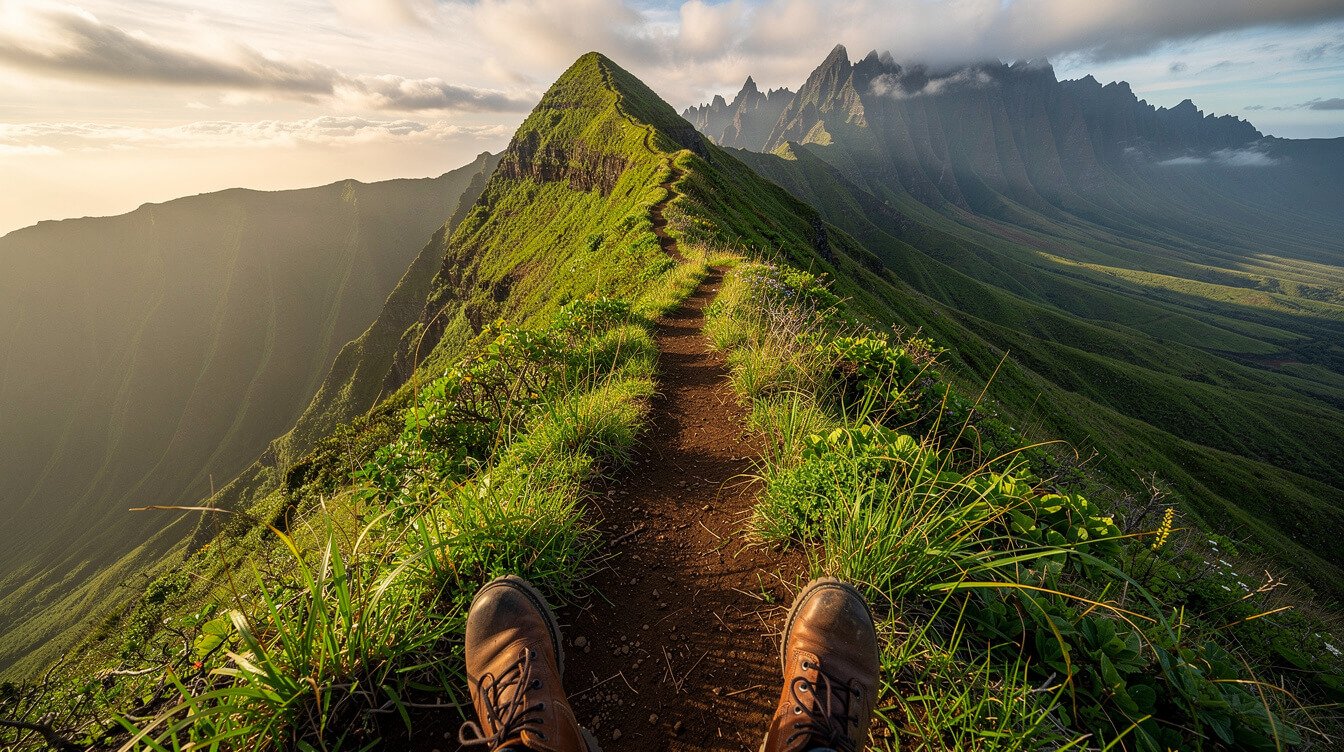
This is the one we send people to first, and it’s not close. Waiheʻe — one of the four sacred waters of Wailuku, Waiehu, Waiheʻe, and Waikapū — climbs the West Maui Mountains along a knife-edge ridge with the kind of views that make you stop talking mid-sentence: Waiheʻe Valley on one side, ʻEke Crater ahead, Haleakalā across the whole island behind you. It’s about 5 miles round trip with roughly 1,500 feet of climbing, so it’s real effort, but it’s free, the parking lot is small enough that it self-limits the crowd, and on a clear morning it’s the single best view-to-effort trail on the island.
The trailhead sits above Waiheʻe town, about a 40-minute drive north from Wailuku on a road that narrows to one lane near the end — go slow and expect to pull over for oncoming cars. Go early, both for parking (the lot holds maybe 30 cars and fills by 8 a.m. on weekends) and for the view — the ridge socks in with clouds by midday more often than not, and that’s the whole show. The first 15 minutes climb a paved cattle pasture road before the real ridge trail starts; after that it’s packed dirt, exposed roots, and a few sections with a cable handhold on the steeper switchbacks. Locals treat this as the litmus test for whether a visiting friend is actually an outdoors person or just says they are.
2. Pīpīwai Trail (Kīpahulu, Haleakalā National Park)
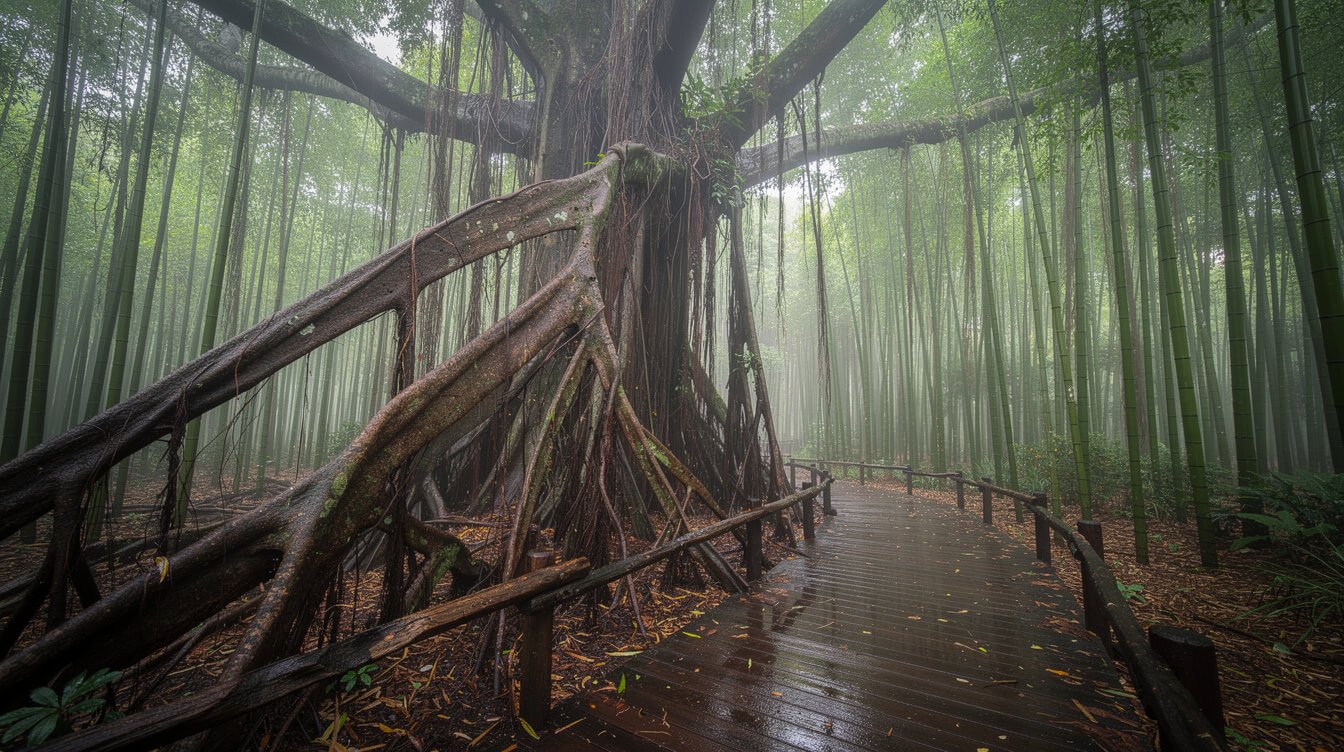
Yes, it’s busy. Yes, it’s on every “must-do” list on the internet. It still earns its spot at #2 because the payoff is real: a mile through a genuinely otherworldly bamboo forest — the stalks knock together in the wind like wind chimes the size of telephone poles — a stop at Makahiku Falls overlook around the 0.5-mile mark, and a finish at the 400-foot Waimoku Falls at the end of about 4 miles round trip with roughly 650 feet of gradual climbing. The giant banyan tree a few minutes past the trailhead, with roots you can walk inside of, is worth the entrance fee on its own.
This is the far end of the Road to Hana, in the Kīpahulu District — figure two-plus hours of driving from Kahului before you even park, so it’s realistically a full-day commitment, not a quick stop. The honest local move is to hit this one at opening (the gate opens early) or in the last two hours before close, not at 10 a.m. when three tour buses just unloaded and the bamboo forest bottleneck backs up into a single-file shuffle. Bring water shoes or grippy sneakers — the boardwalk sections through the bamboo get slick, and there are a couple of stream crossings that turn ankle-deep after rain. More on the entrance fee and reservation reality in the permits section below.
3. Hoapili Trail / King’s Highway (South Maui)
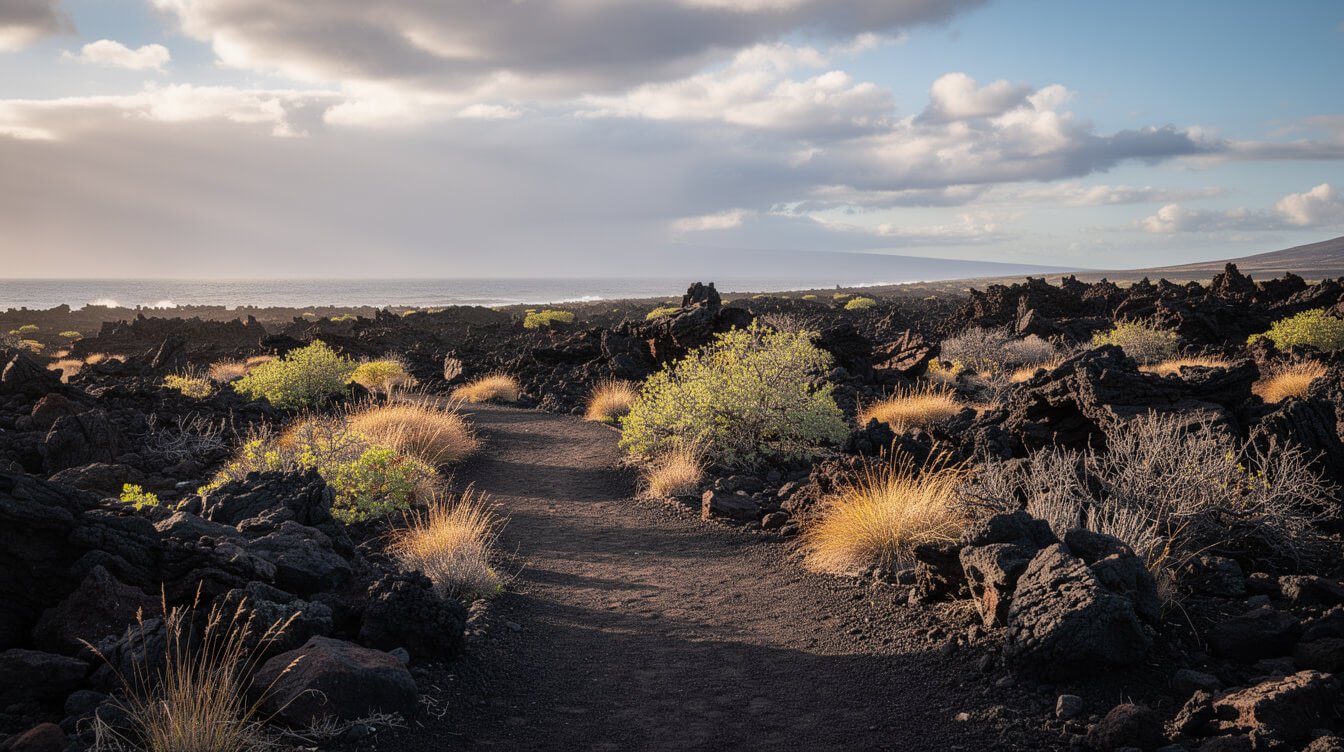
This is the trail we recommend to anyone who wants Maui without the crowds, and it delivers something the others don’t: history under your feet. The Hoapili Trail follows a surviving stretch of the ancient King’s Highway, a footpath network first built over 500 years ago under the aliʻi Piʻilani to connect Maui’s moku (districts), then reconstructed in the 1830s under Governor Hoapili. It crosses a stark, black, 300-year-old lava field between La Perouse Bay and Kanaio — most people walk out an hour or two and turn back rather than doing the full route.
It’s hot, rugged, and shadeless the entire way, so bring more water than you think you need and start early before the lava field turns into a griddle. Sturdy shoes are non-negotiable — the trail surface is broken ʻaʻā lava that will shred a sneaker. It also runs past real archaeological sites — old fishing shrines, salt pans, and heiau — that are part of a storied, living place, not scenery for a photo. Stay on the trail, don’t stack rocks or move anything you find, and treat it the way you’d want someone treating a place that matters to your own family. This is also the trail we point people to who ask us for “the real Maui, not the resort version” — you won’t find a tour bus here.
Strong seconds: #4–6
4. Kapalua Coastal Trail (West Maui)
An easier, ocean-level counterpoint to the ridge hikes — about 4 miles round trip along lava shoreline past nesting shearwater colonies to the Dragon’s Teeth rock formation, a jagged lava outcrop carved by centuries of wave action. Mostly flat with a few rocky sections, so it’s a good pick for a lighter day or a group with mixed fitness levels. Good sunset hike too, since it runs mostly west-facing. Park near Napili Kai Resort on the street or pay for the Kapalua Golf Course lot, and start the trail near Merriman’s restaurant heading north.
5. Keoneheʻeheʻe Trail, a.k.a. Sliding Sands (Haleakalā summit)
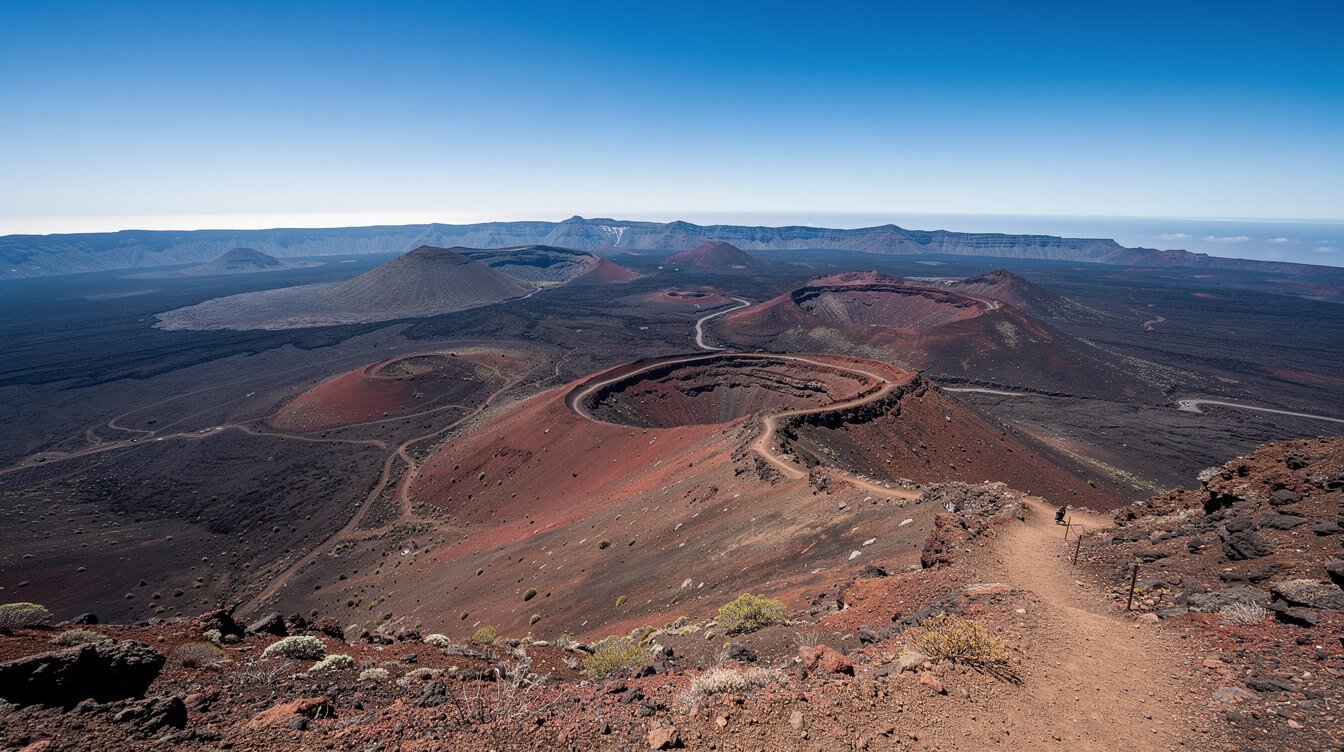
Dropping into the Haleakalā crater on red-and-black volcanic sand feels like walking on Mars, and the rare, endangered ʻāhinahina (silversword) growing only here and on two Big Island volcanoes is reason enough to go even a short distance in. The full crater floor and back out via Halemauʻu is a serious 11-mile point-to-point that needs a shuttle or second car; most visitors do the first mile or two down to the crater floor and back, which still delivers the otherworldly view without the all-day commitment. Remember the math that trips people up every time: going down at 7,000+ feet feels deceptively easy, and you still have to climb every one of those feet back out in thinner air. Start cold-weather layered — the summit can be near freezing at dawn — and expect to peel layers fast once the sun’s up.
6. ʻĪao Valley State Monument (Central Maui)
Short, shaded, and easy — a paved path to the ʻĪao Needle lookout that most people can do in under an hour, with a side trail down to ʻĪao Stream if the water’s calm and clear enough to wade. Worth knowing before you go: this valley is the site of the 1790 Battle of Kepaniwai, where Kamehameha I’s forces fought Maui’s army under Kalanikūpule in one of the bloodiest turning points in the islands’ unification — Kepaniwai literally means “the damming of the waters.” It’s a beautiful, jungle-green walk, but it’s also a place with real weight to it — worth a moment of quiet at the lookout, not just a photo.
Permits and reservations you need before you go
This is the section every other “best hikes on Maui” guide skips, and it’s the one that actually ruins trips.
Haleakalā sunrise reservation: If you want to drive into the Haleakalā summit district between 3 a.m. and 7 a.m. for sunrise, you need a separate $1-per-vehicle reservation booked on Recreation.gov, up to 60 days out, with a small batch released two days before each date — and it’s online-only, nobody’s handing these out at the gate. That reservation is on top of the park entrance fee ($30 per vehicle, good for three days, or a $55 annual Haleakalā pass). If you’re hiking Keoneheʻeheʻe or Halemauʻu after 7 a.m., or heading to Kīpahulu for Pīpīwai, you don’t need the sunrise reservation at all — just the entrance fee.
Waiʻānapanapa reservation: Not a hike on this list, but if you’re combining any of these with the Road to Hana, know that non-resident visitors now need a prepaid reservation to enter Waiʻānapanapa State Park at all — $5 per person plus $10 per vehicle, booked online, released 30 days ahead. Show up outside your reserved window and they can turn you away at the gate.
Everything else on this list: Waiheʻe Ridge, Hoapili, Kapalua Coastal, and ʻĪao Valley don’t require advance reservations, though ʻĪao charges a small parking and entrance fee at the gate ($10 non-resident parking, $5 entrance, free for residents with ID). Build your morning around the trail that has a reservation window, then fill the rest of the day around it.
If you miss the sunrise reservation window and still want the Haleakalā crater experience, the honest local workaround is simple: go for sunset instead, or arrive after 7 a.m. once the reservation requirement lifts. You lose the sunrise crowd on the summit but you also lose the actual crowd, and Keoneheʻeheʻe still looks like Mars at 9 a.m.
Overhyped vs. underrated: an honest local call
Overhyped: Twin Falls, the first big waterfall stop on the Road to Hana. It gets sold online as a must-do hike, but it’s not a trail at all — it’s a privately owned working farm (Wailele Farm) charging $10–15 for one of about 55 parking spots, first-come-first-served, usually full by mid-morning. It’s fine if you’re already stopping, but don’t build your day around it.
Underrated: Waihou Spring Trail, up in Kula. It’s a quiet 1.8-mile loop through a misty Monterey cypress and eucalyptus forest planted over a century ago as a reforestation experiment, with none of the tour-van energy of the Road to Hana stops. It reopened after Olinda Fire damage a couple of years back, so check the state Nā Ala Hele trail listing before you head up — but on a good day, it’s the closest thing to hiking alone on this island.
Trail safety: flash floods, mud, and heat
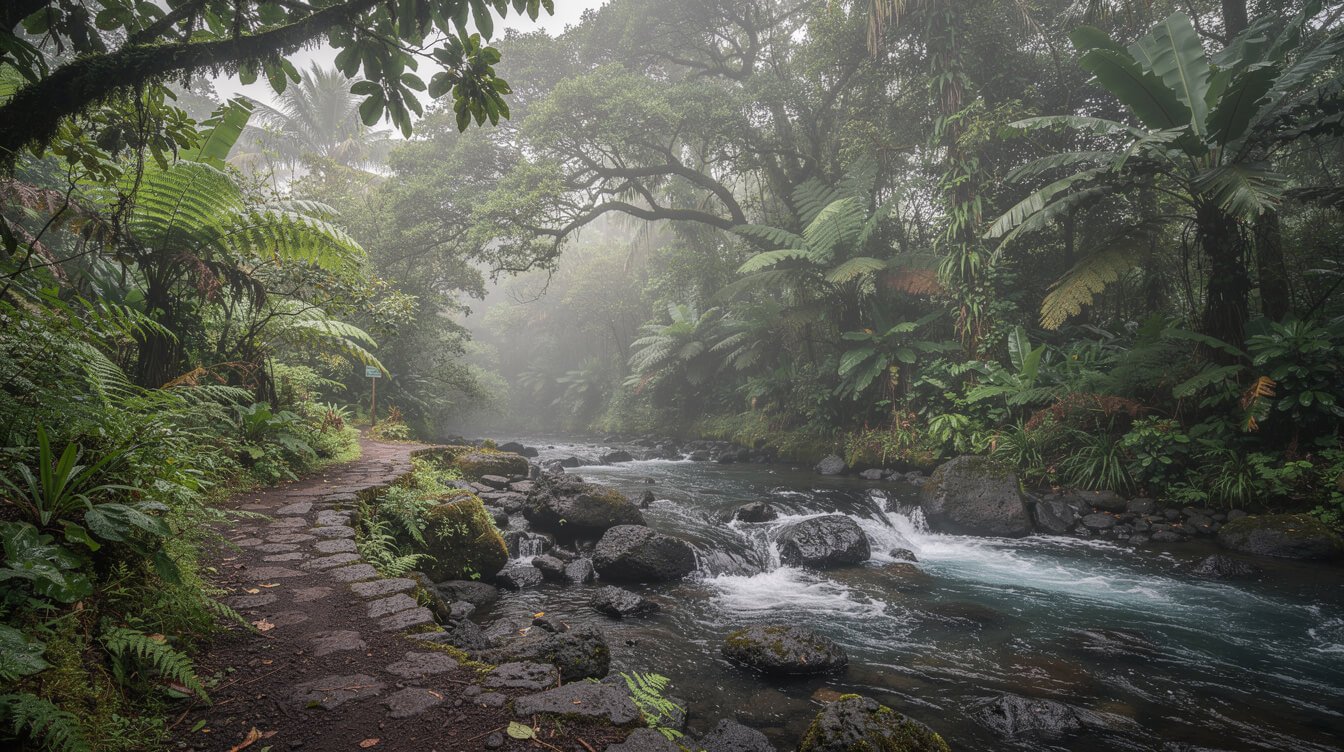
Two real risks show up on almost every one of these trails, and neither gets taken seriously enough by first-timers.
Flash floods. Pīpīwai and any stream crossing on Maui can go from ankle-deep to dangerous in minutes during upcountry rain you can’t even see from the trailhead. If the water starts running fast, cloudy, or rising, turn around immediately — don’t try to beat it across.
Mud season. Waiheʻe Ridge and Halemauʻu turn genuinely slick after rain, which is often, given they’re both on the wet, windward side of their respective mountains. Trail runners are not enough; wear real hiking shoes with grip, and expect to move slower than the posted time.
Heat and sun exposure. Hoapili Trail has zero shade across an exposed lava field, and Keoneheʻeheʻe drops you into a crater with reflective volcanic sand and thin air at altitude — sunburn and dehydration happen fast on both. Bring more water than feels necessary, always.
Cell service. It’s spotty to nonexistent on Hoapili, on the far side of the Haleakalā crater, and for long stretches of the Kīpahulu district. Tell someone your trail and your expected return time before you start, and download offline maps ahead of time — don’t count on your phone finding a signal if something goes sideways.
General rule for all of it: if the weather turns, the trail floods, or you’re not sure — turn back. No view on this list is worth a rescue, and Maui’s search-and-rescue crews will tell you the same thing every single week.
What to bring (and the local move on gear)
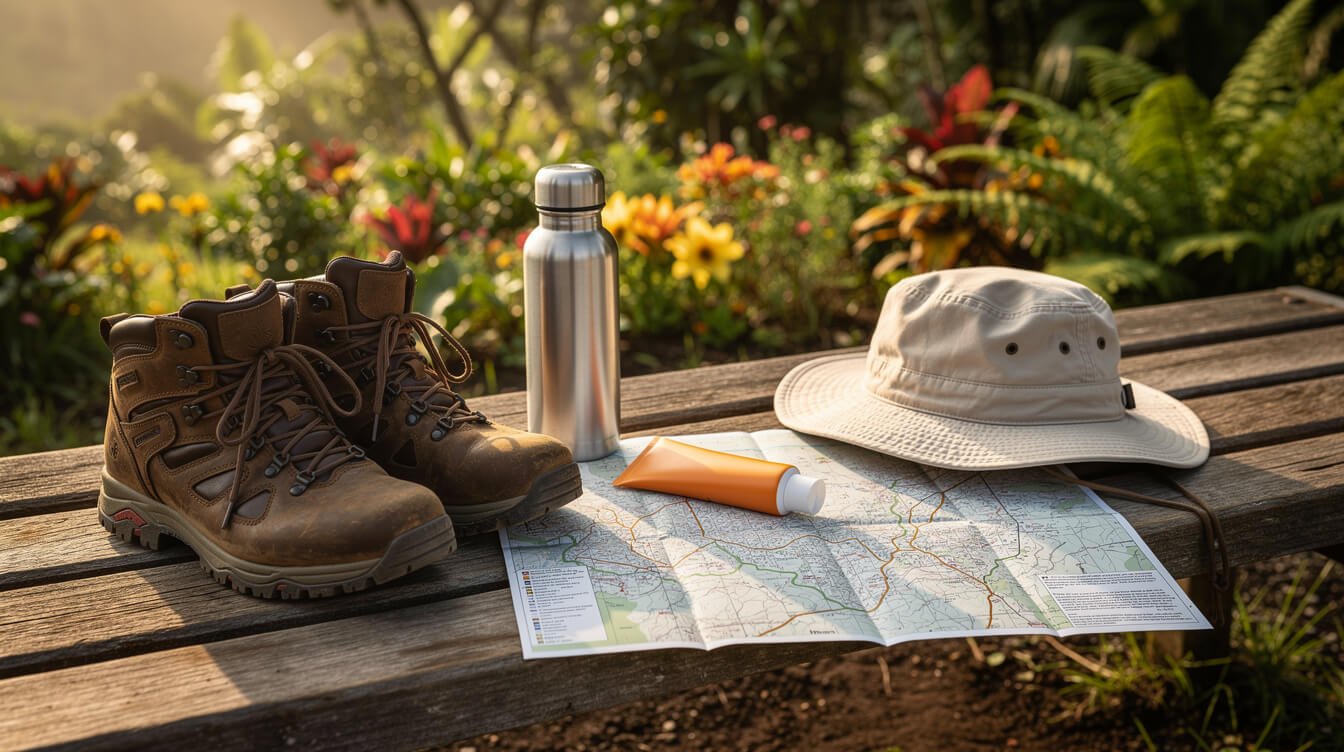
Real hiking shoes, not sandals — lava rock and wet ridge trail both punish flip-flops. Sun protection matters more here than almost anywhere: a hat, reef-safe sunscreen, and a shirt that actually covers your shoulders on the exposed trails like Hoapili and Keoneheʻeheʻe. A local move is to layer for temperature swings — it can be 75°F and humid at a Kapalua trailhead and near freezing at the Haleakalā summit the same morning. If you want a shirt that can do double duty as sun cover on the trail and something you’d actually wear back at the beach after, that’s exactly the lane our island-made designs live in — made for people who are actually out here, not just posing at the trailhead sign.
Best hikes on Maui: quick answers
What’s the easiest hike on Maui for beginners or kids?
ʻĪao Valley State Monument, hands down — it’s paved, shaded, and mostly flat to the Needle lookout. Kapalua Coastal Trail is a close second if you want ocean views with an easy walking surface.
Do I need a permit for the Pīpīwai Trail?
No separate permit — just the Haleakalā National Park entrance fee ($30 per vehicle, valid three days). You only need the extra reservation if you’re also doing sunrise at the summit district before 7 a.m.
Can a moderately fit person hike into the Haleakalā crater?
Yes, for the first mile or two of the Keoneheʻeheʻe (Sliding Sands) Trail — that’s the range most visitors comfortably manage. The full 11-mile crater crossing is a genuine backcountry hike and needs real fitness, layered gear, and a plan for the climb back out.
Is Twin Falls actually worth stopping for on the Road to Hana? If you’re already driving past and there’s parking, sure — it’s a pretty roadside waterfall. Just know it’s a private farm charging for parking, not a maintained trail, and it shouldn’t be the reason you plan your Hana day.
Final thoughts
The best hikes on Maui aren’t the ones with the most tags on social media — they’re Waiheʻe Ridge on a clear morning, Pīpīwai timed right to dodge the buses, and Hoapili if you want the island quiet and a little humbled. Book the Haleakalā sunrise reservation early if you want it, respect the ground you’re walking on at ʻĪao and Hoapili, and turn back when the weather tells you to.
If beaches are more your speed after all that mud, we ranked the best beaches in Hawaii the same honest way, and if you’re heading out on the water instead of the trail, here’s the best snorkeling spots on Maui, honu rules included.