Hawaiian Dishes, Ranked: The Ones Locals Actually Order
If you ask ten people what “Hawaiian dishes” means, you’ll get ten different plates — and honestly, that’s kind of the point. Some of what lands on the table here goes back centuries, some of it showed up with plantation workers a hundred years ago, and some of it was invented by hungry teenagers in Hilo in 1949. All of it is real, all of it matters, and almost none of the “top Hawaiian foods” lists floating around online bother to tell you which is which — or where a local would actually go eat it, instead of pointing you at a hotel buffet with a $90 cover charge. We’re fixing that.
This is a ranked, honest rundown of the dishes worth planning a meal around, plus the real spots — counters with a line out the door, not luau stages — where you’ll find each one done right. No filler dishes just to hit a round number, no “try the local cuisine!” hand-waving.
What actually makes a dish “Hawaiian”
Quick and important distinction most food-and-travel posts skip entirely: there’s Native Hawaiian food — kālua pork, poi, laulau, lomi-lomi salmon — rooted in the ʻāina and generations of Kanaka Maoli tradition, long before anyone called this a “cuisine” or put it on a menu. And there’s local-style food — loco moco, saimin, spam musubi, manapua — the plantation-era mashup of Japanese, Chinese, Portuguese, Filipino, and Korean cooking that grew up alongside it, shoulder to shoulder, in the same lunch wagons and back kitchens.
That second category exists because of a very specific history: from the 1850s through the early 1900s, sugar and pineapple plantations brought waves of immigrant labor to the islands, and workers from very different food traditions ended up eating lunch together every day. Bento boxes traded hands with Portuguese sweet bread, Chinese char siu met Hawaiian rice, and a whole new, genuinely local food culture came out of it — one that didn’t exist anywhere else before and still doesn’t exist anywhere else now.
Both categories are Hawaiian dishes in the sense that matters here — you’ll only find them, done right, on these islands. But they come from different roots, and lumping everything into one big “island food” pile the way tourist blogs do flattens something that deserves better. We’re ranking both below, and we’re telling you which is which as we go.
The Hawaiian dishes worth planning a meal around
#1 — Kālua pork & laulau
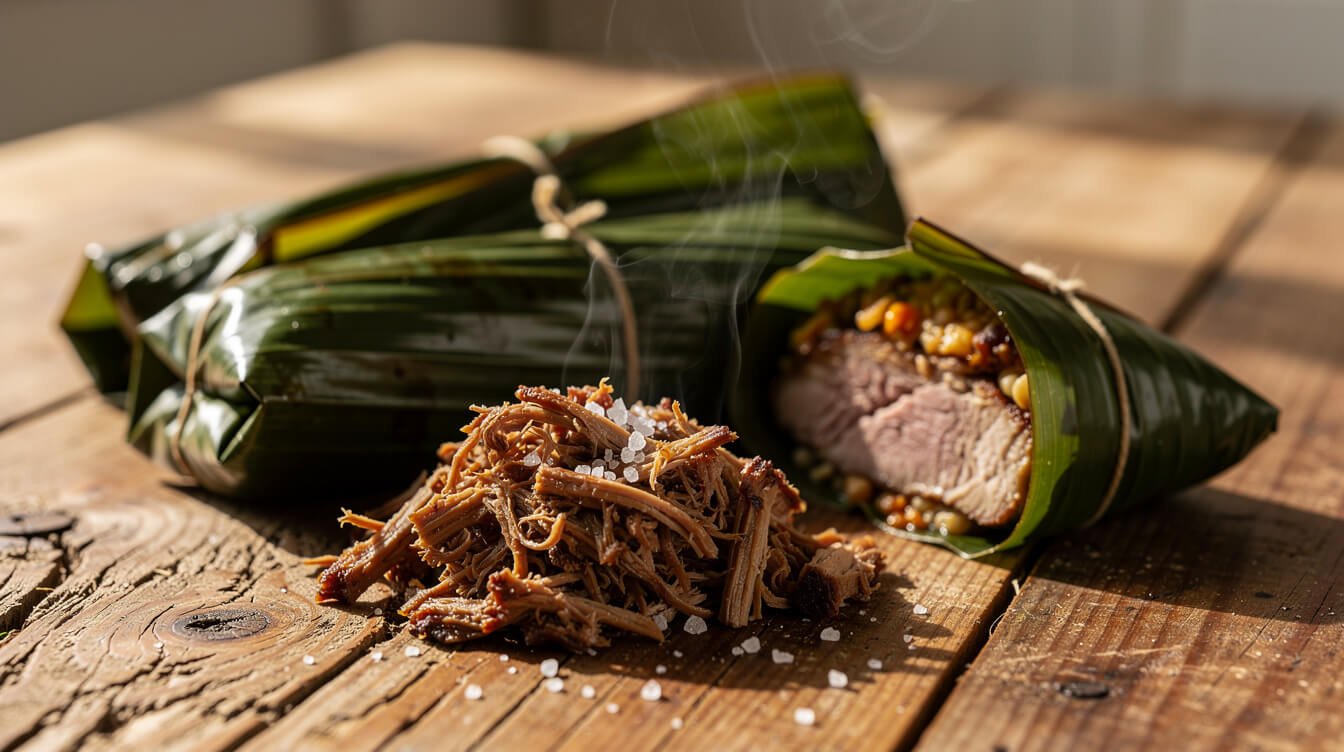
If you only eat one Native Hawaiian dish this trip, make it this one. Kālua pork is whole pig, seasoned simply with Hawaiian salt, wrapped in ti and banana leaves, and slow-cooked for hours in an imu — an underground oven lined with hot volcanic stones. The result is smoky, tender, falls-apart pork that doesn’t need much else done to it, which is exactly the point. Laulau does the same slow-cook technique in miniature: pork (sometimes with butterfish) wrapped in taro leaf, steamed until the leaves themselves turn soft and spinach-like and fully edible.
Why it ranks #1 and not just “on the list”: everything else here is genuinely good, but kālua pork is the dish where the technique and the flavor and the history are all doing the same work at once. You can taste the imu in it. There’s no shortcut version that comes close, which is also why it’s the easiest dish on this list to get badly at a mediocre restaurant — the corners that get cut (oven-roasted instead of imu-cooked, liquid smoke instead of the real thing) are corners you can taste.
Where to get it right: Helena’s Hawaiian Food in Kalihi has been run by the same family since 1946 and picked up a James Beard America’s Classic award for it — that’s not tourist-board marketing, that’s the country’s own food establishment agreeing with what Kalihi already knew for decades. Order the pork, order the laulau, and don’t rush it.
#2 — Poke
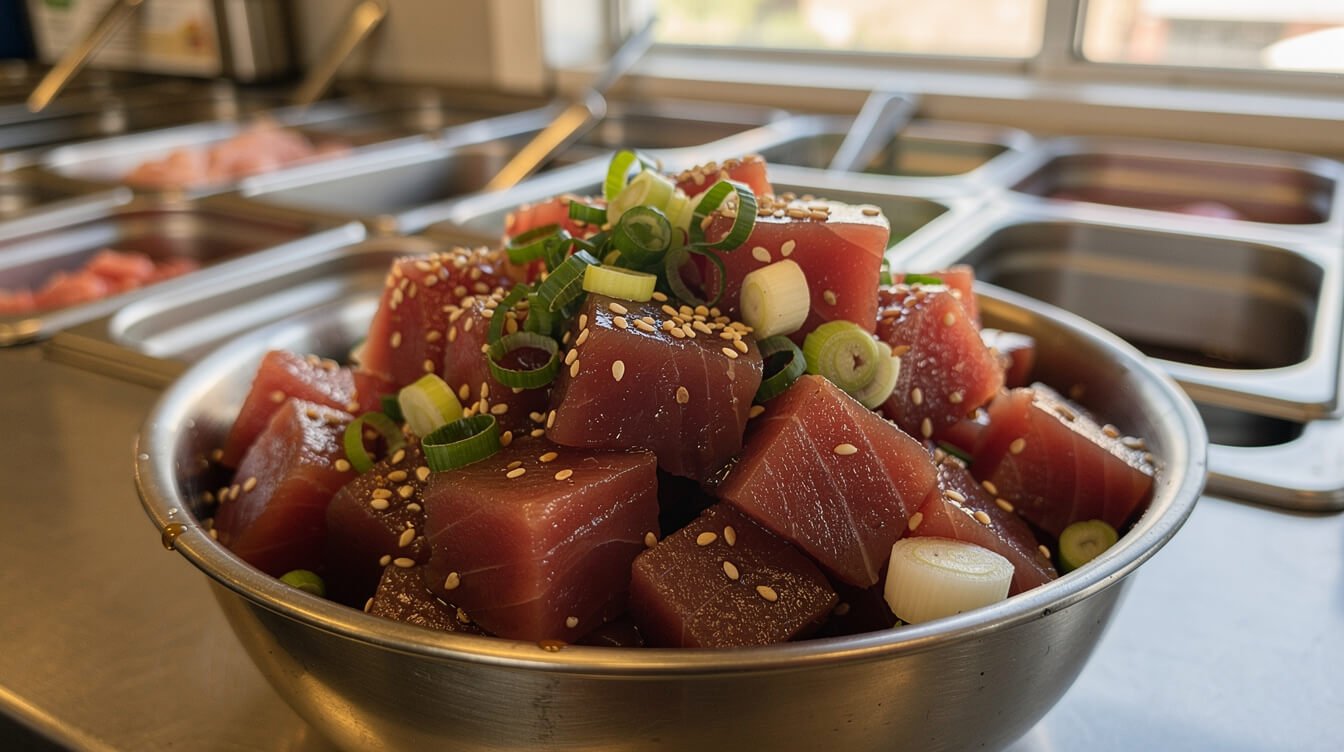
Poke (rhymes with “OK-ay,” not “poke” like you’re jabbing someone) is raw fish — usually ahi tuna, sometimes tako (octopus) — cut into cubes and marinated, traditionally with just sea salt, limu (seaweed), and inamona (roasted, ground kukui nut). The trendy soy-sesame “poke bowl” you’ve seen show up on the mainland over the last decade is a real style too, just a newer branch of the same tree. Both count as legitimate poke. What doesn’t count is week-old fish dressed up in a heavy sauce to hide it — and unfortunately, that’s most of what tourist-zone poke counters near the beach are actually selling.
The tell for good poke is simple: it should smell like the ocean, not like fish that’s turning. If the counter is busy and turning over fish fast, that’s a good sign before you’ve even tasted anything.
Where to get it right: Ono Seafood, a tiny no-frills counter in Kaimukī, is the standard the rest of the island gets measured against — expect a line, expect it to move fast, expect the fish to actually taste like fish. Saturday mornings, the food trucks at Kakaʻako Farmers Market are a solid backup with the bonus of everything else at the market happening around you.
#3 — Loco moco
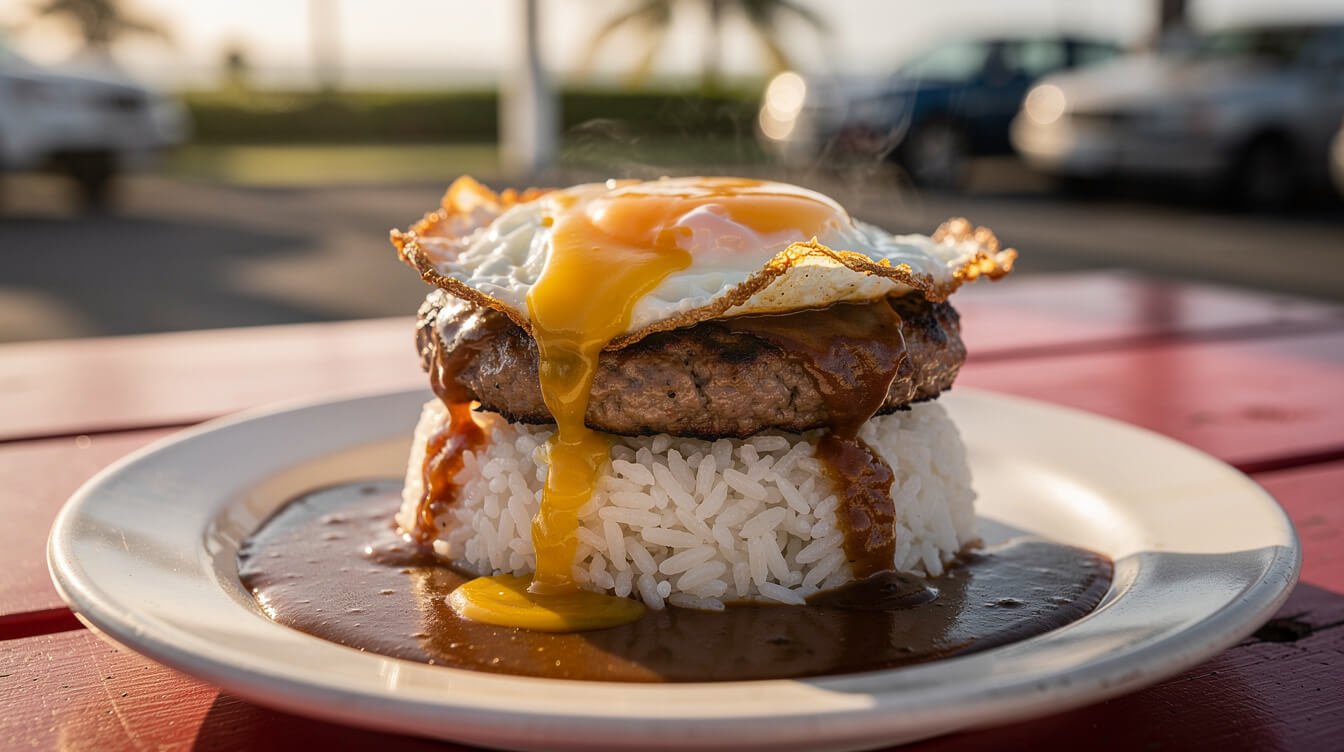
White rice, a hamburger patty, brown gravy, a fried egg on top with the yolk still runny so it bleeds into the gravy when you cut it. The real origin story, and it’s a good one: in 1949, a group of teenagers at the Lincoln Grill in Hilo — members of the Hilo Lincoln Wildcats athletic club — asked for something cheap, filling, and faster to make than a sandwich after a day of sports. The cook improvised with what was already in the kitchen. Nearly eighty years later it’s a full-blown local institution, and every plate lunch spot in the state has its own version, with its own opinion about how thick the gravy should be.
Where to get it right: Rainbow Drive-In in Kapahulu has been slinging plate lunches since 1961, and its loco moco is the one locals actually compare every other version against. Order it at the walk-up window, eat it in the parking lot on the hood of your car like everyone else does — that’s not a quirky suggestion, that’s just how it works there.
More Hawaiian dishes that deserve a spot on your plate
#4 — Poi & lomi-lomi salmon
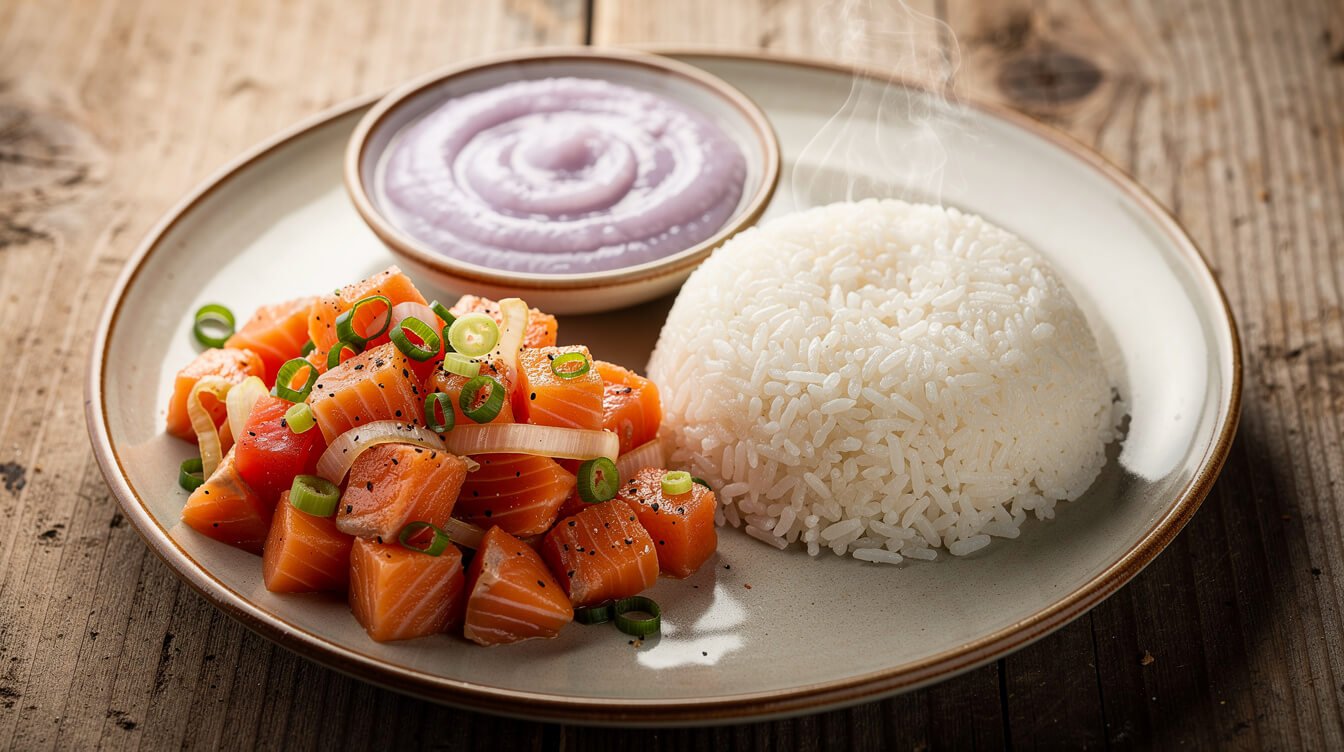
Poi is pounded, lightly fermented taro root, worked into a smooth, purple-gray paste — the traditional staple starch of the Native Hawaiian diet for over a thousand years, historically eaten with two fingers straight from a communal bowl, mildly tangy and starchy rather than sweet. It’s an acquired taste for a lot of first-time visitors and a genuine comfort food for kamaʻāina who grew up on it. Lomi-lomi salmon (salted salmon, diced tomato, and onion, all massaged together — “lomi” means to rub or knead — into a cold, bright relish) is the plantation-era addition that now shows up on almost every traditional plate alongside it, a good contrast to the richness of the pork.
Where to get it right: Highway Inn in Kakaʻako, family-run since 1947, keeps both on the menu done the traditional way, and it’s an easy add-on to a laulau plate if you want the full spread — poi, laulau, lomi-lomi salmon, kālua pork — in one sitting.
#5 — Saimin, spam musubi & manapua
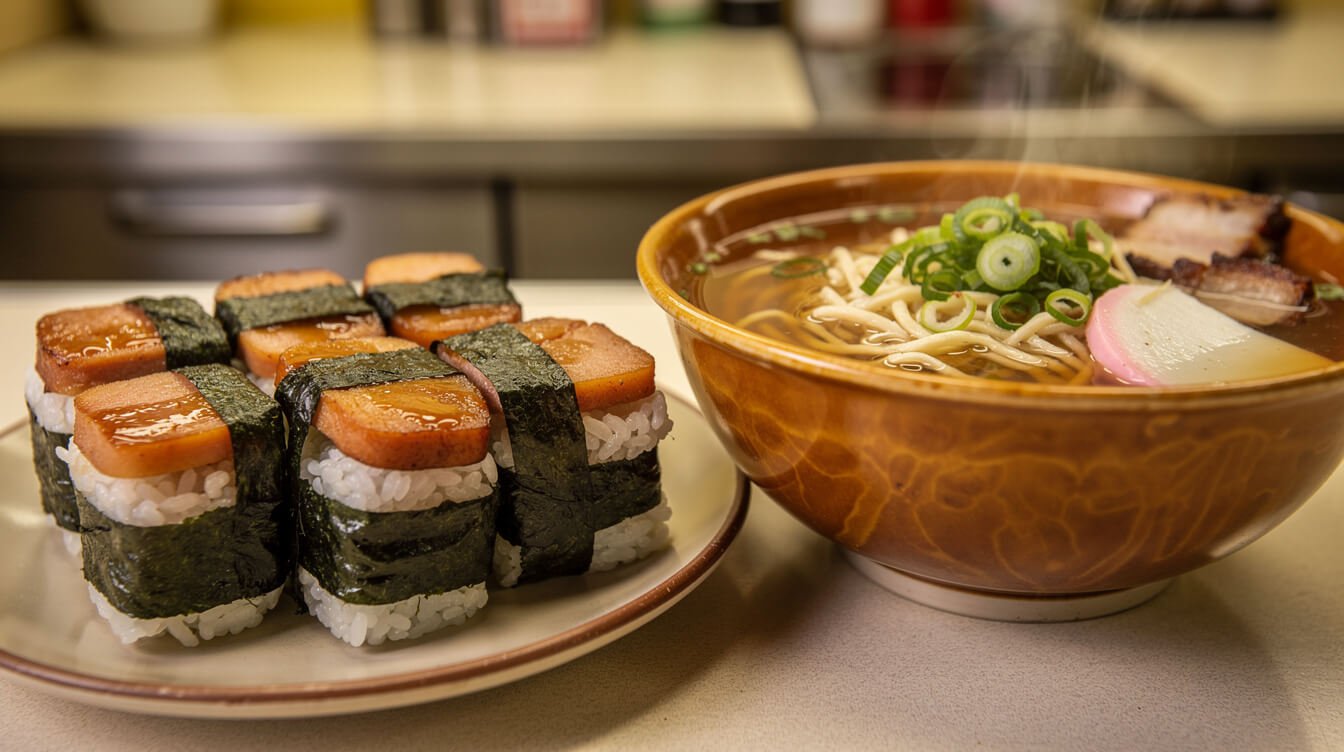
These three are the everyday local kine — what you grab on the way to work, not what you plan a special trip for, which is exactly why competitor “top Hawaiian foods” lists tend to skip them, and exactly why they belong here. Saimin is Hawaii’s own noodle soup, a Japanese-Chinese-Filipino mashup found nowhere else in this exact form — soft wheat noodles in a light, slightly sweet dashi-based broth, kamaboko (fish cake) and green onion on top, sometimes a slice of char siu. Spam musubi is a block of fried Spam over a slab of rice, wrapped in nori — Hawaii’s own answer to Japanese onigiri, adopted so completely that this state eats more Spam per capita than anywhere else in the country. Manapua is the local name for char siu bao — steamed or baked buns stuffed with char siu pork, a Chinatown staple that goes back to the plantation days when it traveled well in a lunch pail.
Where to get it right: Zippy’s, the statewide local chain, keeps a legit saimin on the menu at every single location if you want a reliable everyday version wherever you happen to be on-island. For spam musubi, the honest answer is any 7-Eleven in Hawaii — yes, really, it’s a genuine local institution here, not a punchline, and the musubi at the counter is usually made fresh that morning. For manapua, Chinatown’s old-school bakeries in Honolulu are still the move, especially first thing in the morning while everything’s still warm.
The plate lunch formula, once you know it
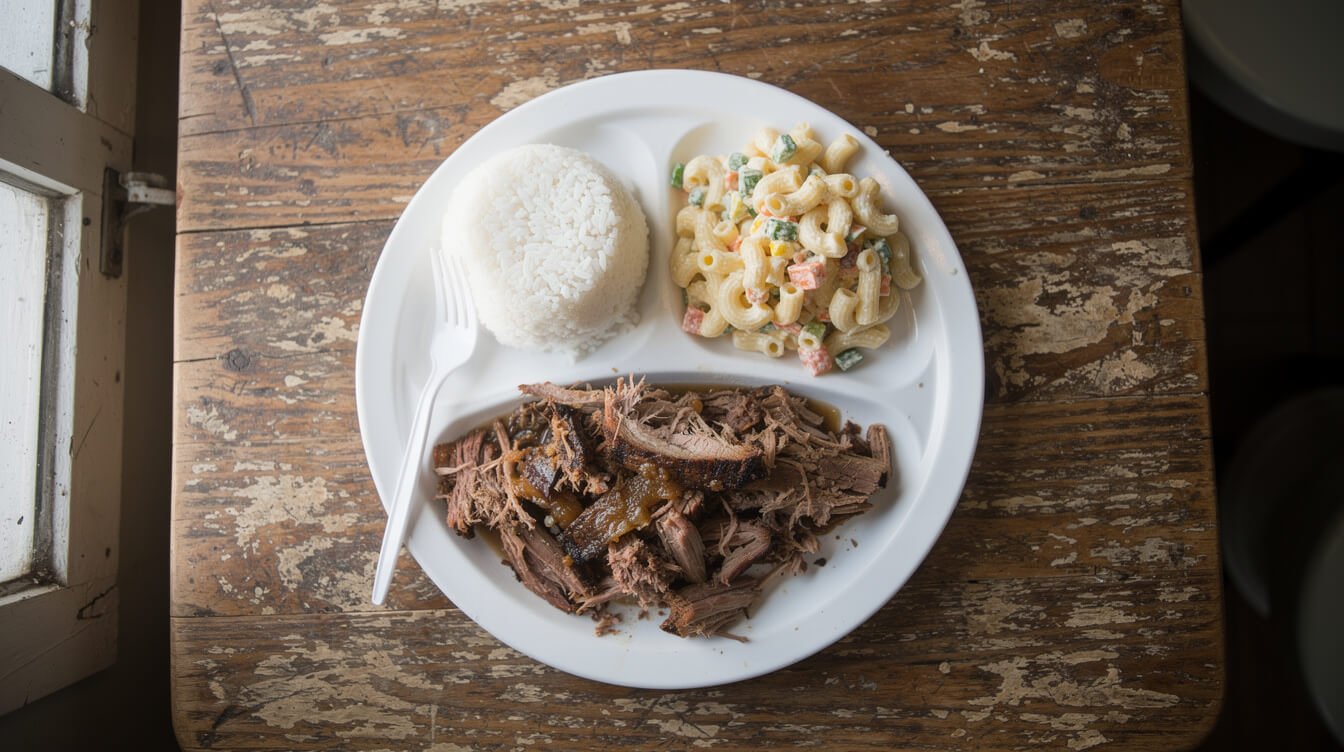
Half the dishes above show up on a “plate lunch” at some point, so it’s worth knowing the formula, because once you see it, you’ll see it everywhere: two scoops of white rice, one scoop of macaroni salad, and a protein — kālua pork, loco moco, teriyaki chicken, whatever the spot does well. It’s a plantation-era invention too, built to feed workers a filling, portable lunch out of a metal tray divided into three compartments, and it’s stuck around because the formula just works. Mac salad in this context isn’t a side dish you can skip; it’s doing real work, cutting the richness of whatever protein is sitting next to it. If a plate lunch spot skimps on it, that’s usually a sign they’re skimping elsewhere too.
You’ll also see the phrase “two scoop rice” treated almost like a punchline among locals — it’s the plate lunch order so standard it barely needs saying, the same way you’d nod along if someone mentioned mac salad without explaining what it was. If a counter asks “one scoop or two,” the correct local answer, unless you’re really pacing yourself, is two.
What about malasadas and shave ice?
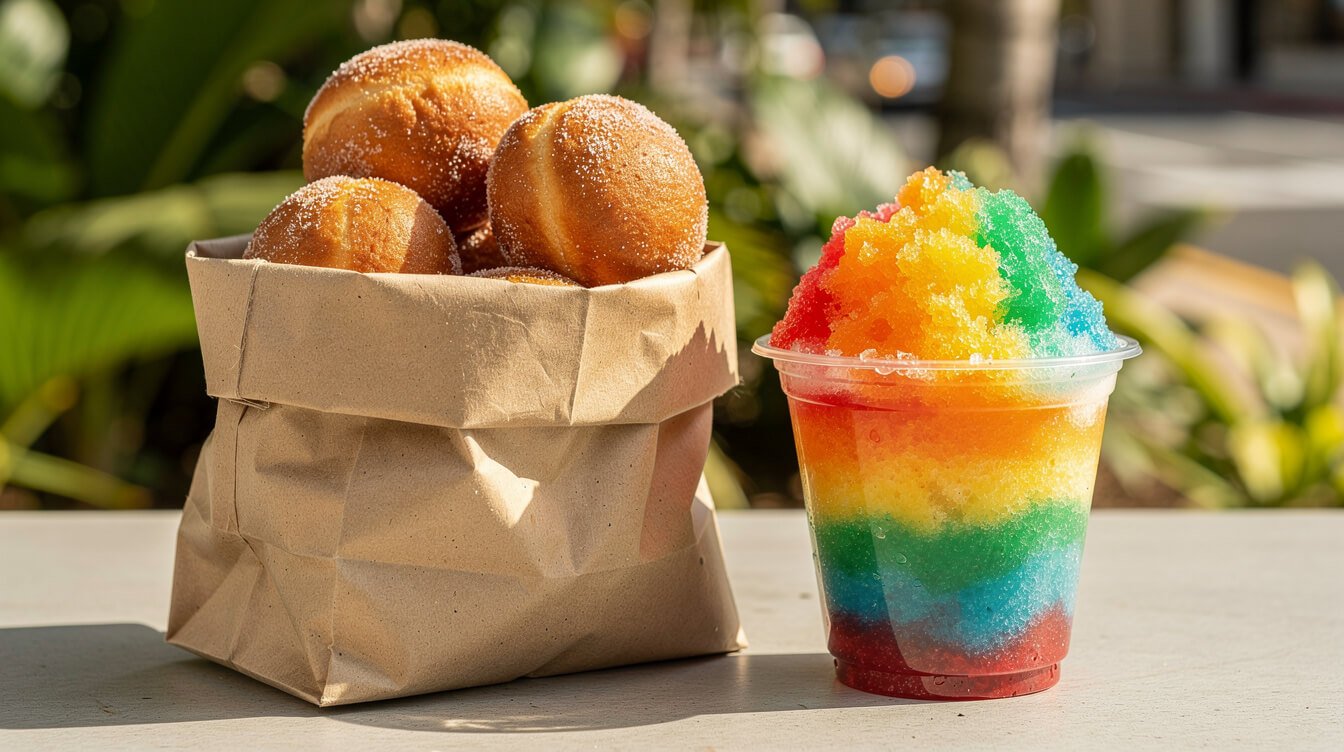
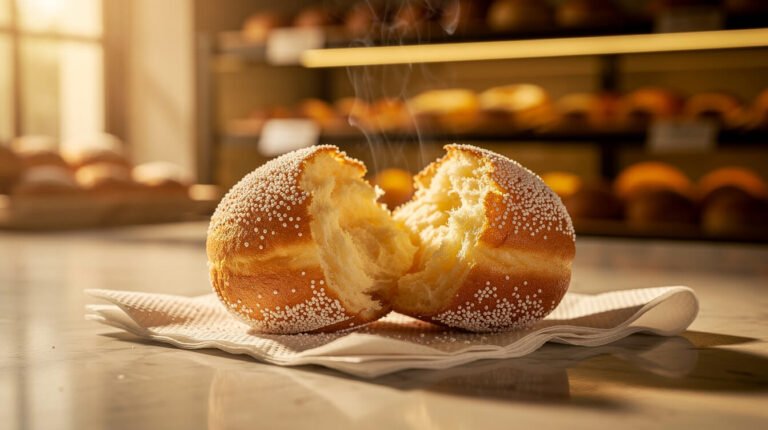
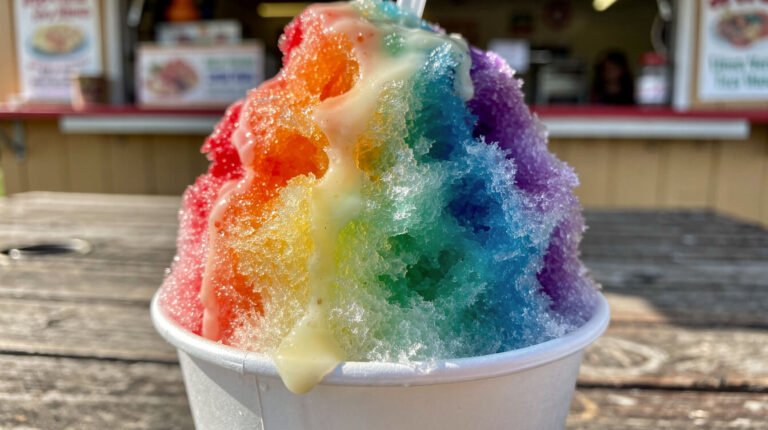
Both absolutely belong on any honest Hawaiian dishes list — a hot, sugar-crusted Portuguese malasada and a well-shaved cup of rainbow-colored ice are as local as it gets, and we’d be doing you dirty leaving them out. We didn’t shortchange either one here; we gave each its own full, properly ranked guide, because a single paragraph in a bigger list wasn’t going to do either justice. Go deep on our ranked guide to the best malasadas on Oahu and the best shave ice on Oahu, ranked by ice texture for the full spot-by-spot breakdown.
FAQ about Hawaiian dishes
What’s the difference between Hawaiian food and “local food”?
Hawaiian food, strictly speaking, means dishes rooted in Native Hawaiian tradition — kālua pork, poi, laulau, lomi-lomi salmon. “Local food” is the broader plantation-era mashup — saimin, loco moco, spam musubi, manapua — that grew up alongside it from Hawaii’s Japanese, Chinese, Filipino, Portuguese, and Korean immigrant communities. Both are part of eating here honestly; they’re just not the same thing, and it’s worth knowing which is which before you call everything on your plate “Hawaiian.”
Is it OK for a visitor to try poi?
Yes — it’s a genuine part of sharing a meal here, not a dare or a gross-out challenge for a video. Try it plain first before reaching for sugar; that’s how it’s traditionally eaten, and it’s a small way to show you’re actually paying attention to what’s in front of you.
Where should I skip if I want the real thing, not a tourist version?
Hotel luau buffets built to feed 300 people a night and airport-adjacent “Hawaiian BBQ” chains are the two biggest tells. A crowded, no-frills counter with a line of locals out front — like the spots named above — is almost always the better bet than anywhere with a laminated menu, a parking valet, and a gift shop attached.
What should I order if I only have one meal to spend on this?
A mixed plate with kālua pork, laulau, and lomi-lomi salmon gets you the widest, most respectful sample of Native Hawaiian food in a single sitting. If you’d rather go local-style instead, a loco moco plus a bowl of saimin covers the plantation-era side just as well.
Is Spam really a big deal in Hawaii, or is that a stereotype?
It’s real, and it’s not a punchline here — Hawaii eats more Spam per capita than anywhere else in the country, a habit that traces back to WWII-era food shortages when fresh meat was hard to get and never really left afterward. Spam musubi at the corner store is a completely normal breakfast, not a novelty.
Why isn’t there a luau on this list?
Because a commercial luau is a paid show built around a meal, not a dish, and the food quality varies wildly operator to operator. If you want the food a luau is built around, order it directly at the spots above — you’ll eat better and spend a lot less doing it.
What does “ono” mean, and why is it on every menu?
“Ono” means delicious — genuinely one of the highest compliments you can give a plate here, not a generic marketing word. If a menu, a truck, or a hand-painted sign says “ono kine grindz,” that’s a local telling you the food is good, not a slogan a tourism board wrote. Worth knowing before you see it fifty times this trip and assume it’s just a brand name.
Final thoughts
The honest version of this list was never going to be ten photogenic dishes with no context — it’s a handful of things genuinely worth your appetite, ranked by what actually holds up, with the real spots attached instead of a generic “try the local cuisine!” nudge. Start with kālua pork if you go nowhere else on this list; round it out with poke, loco moco, and a bowl of saimin if you’ve got the time and the stomach room to spare.
If this is the kind of detail you actually care about, the shop has designs made for people who know the difference between Hawaiian and local-style without being told. And if you’re building out the rest of your island eating list, we’ve also ranked the best restaurants in Honolulu, the best malasadas on Oahu, and the best shave ice on Oahu the same honest way.