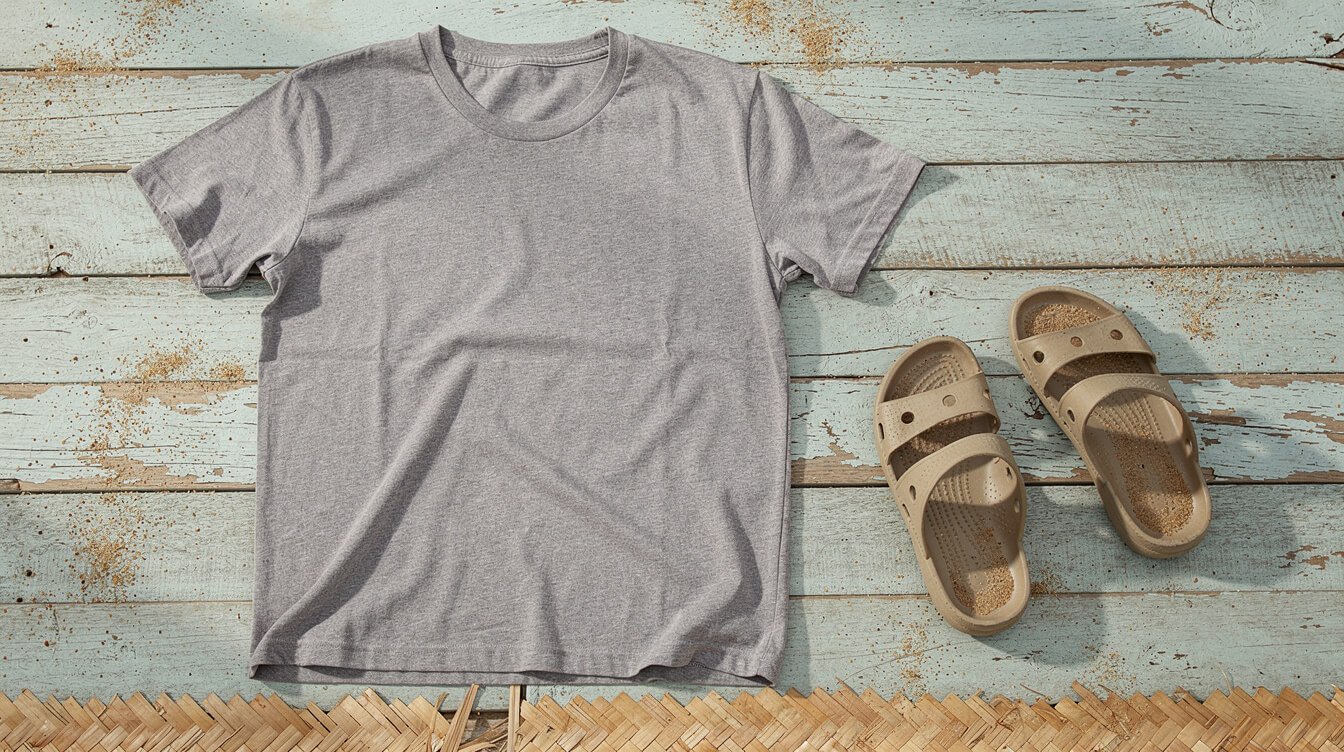
Hawaii T-Shirts a Local Would Actually Wear (How to Spot the Real Thing)
Search Hawaii t-shirts and you get a wall of the same thing: palm trees, hibiscus, a surfboard graphic somebody drew on the mainland, and a tiki font that no local has ever willingly worn. It all sells fine to somebody catching a flight home. But if you grew up here — or you left and still feel the pull of home — you already know the difference between a shirt that says I was on vacation and one that quietly says I belong to this place.
This is a local’s guide to that difference. Not a shop-this-grid list — a real breakdown of how to tell a kamaʻāina-worthy Hawaii tee from the ABC-store version before you spend a cent. We will talk design, the tourist tells that give a shirt away, the fabric and fit you feel before you see, and the IYKYK reference that earns the nod at the beach. By the end you will be able to spot the real thing across a crowded swap meet.
The two kinds of Hawaii t-shirts (and why one makes locals cringe)
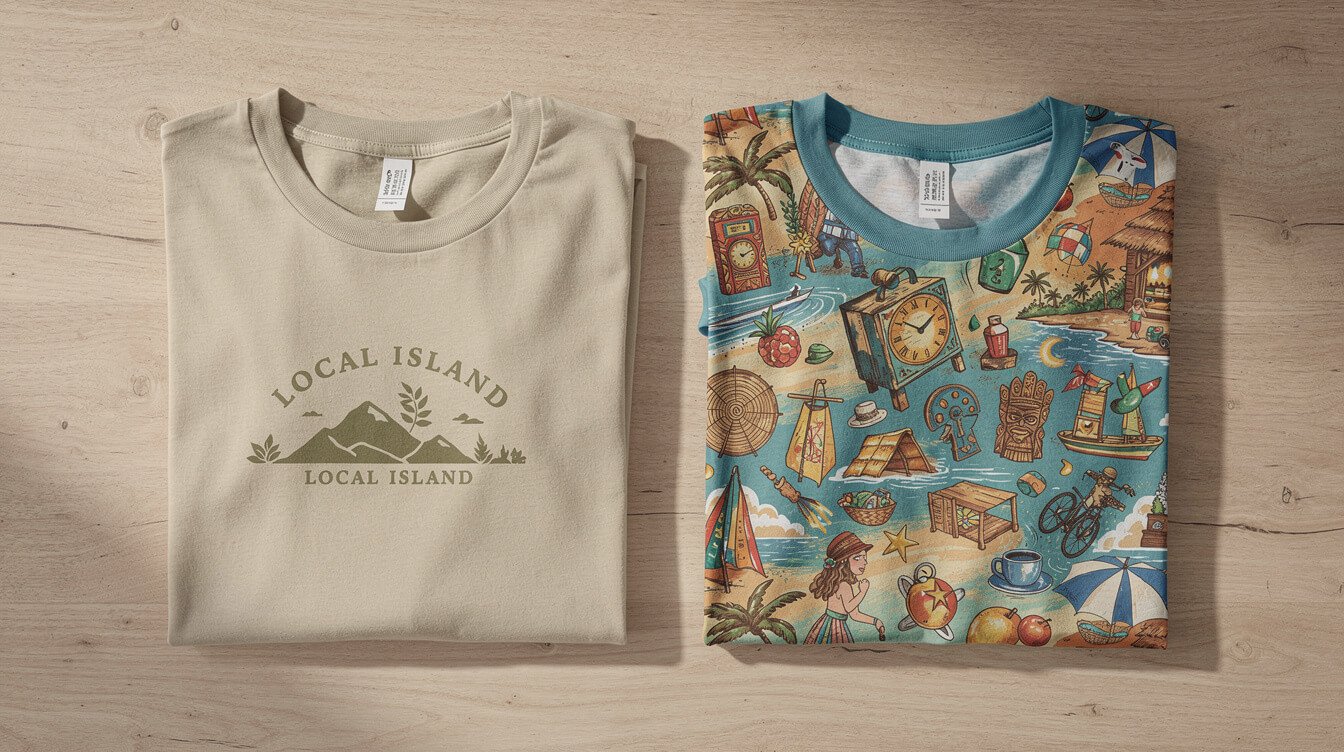
There are really only two kinds of Hawaii t-shirts, and they are aiming at two completely different people.
The first kind is a souvenir. It exists to prove somebody was here. Big island-map graphic, the word HAWAII in a font pretending to be bamboo, a sunset that could be anywhere with a beach. It is not made for the islands so much as made about them, from the outside, for someone who is leaving. Nothing wrong with a souvenir — but a local can read it from across the parking lot, and it never gets worn twice once the tan fades.
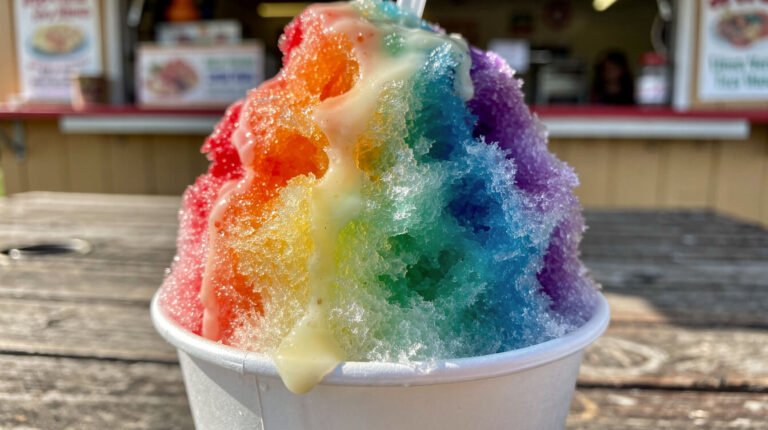
The second kind is the shirt a local actually reaches for on a Tuesday. It carries a reference instead of a landmark: the sound of the ice cream truck, a plate-lunch order, a stretch of road you only know if you have driven it, a bit of pidgin dropped exactly the way people really say it. It does not announce Hawaii. It assumes you already know, and it rewards you for knowing. That is the whole game.
The cringe comes from the gap between those two. When a shirt tries to sell island identity to the people who live that identity, and gets a detail wrong, it reads as costume. Locals are not snobs about it — they are just fluent. The same way you would clock a fake accent in two words, a good Hawaii tee is either fluent or it is not. There is no in-between, and no amount of bright color hides it.
What a Hawaii t-shirt gets right when a local designed it
You can usually feel a locally designed shirt before you can explain it. Here is what is actually happening under the hood.
It references, it does not label. A tourist shirt tells you where you are. A local shirt trusts you to already know. Instead of the state name across the chest, you get the specific thing — the shave ice order, the 808, the makai-side view — with no caption. If it needs a footnote to land, it is the wrong design. That is the IYKYK island doctrine in one line: no footnotes.
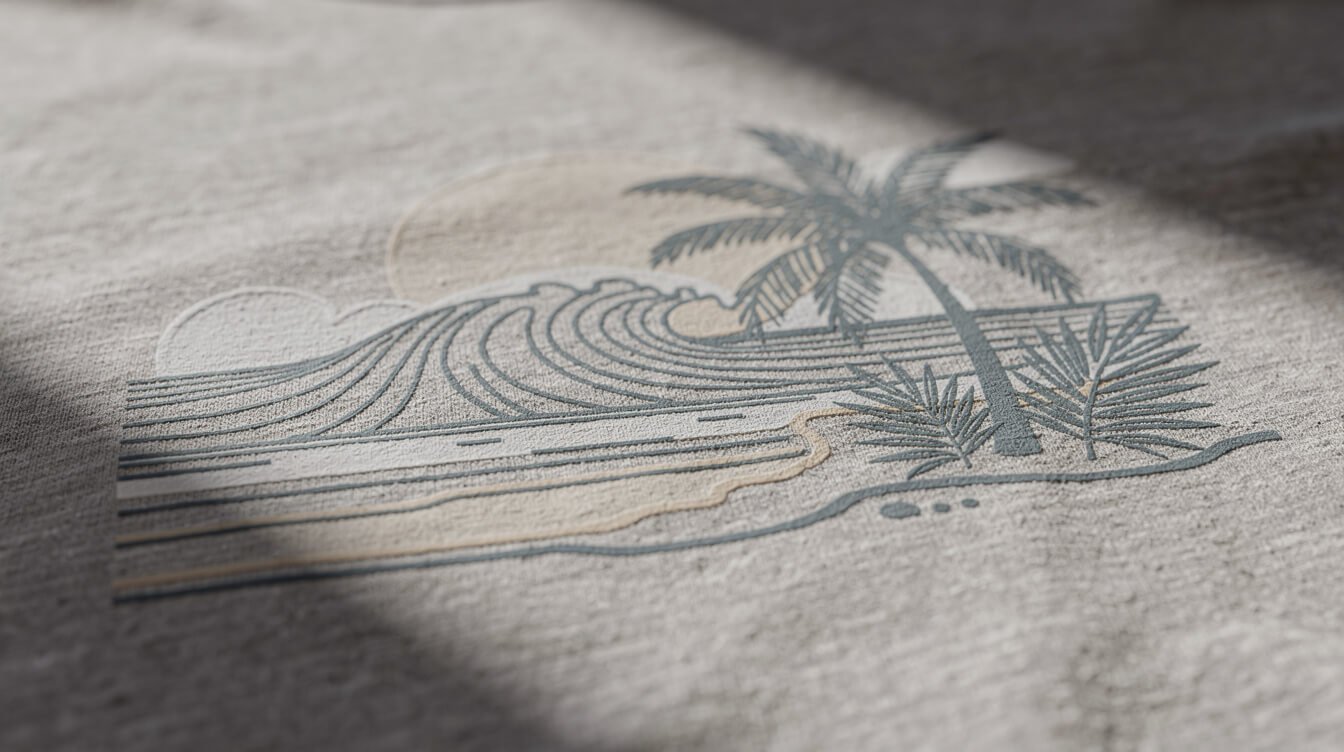
It is specific, not scenic. Scenery is generic — a palm and a wave belong to any coast on earth. Specificity is what makes a local smile: the exact snack, the exact stretch of highway, the exact phrase your aunty uses. Specific beats scenic every time, because specific is the part a visitor never saw.
It respects the culture instead of decorating with it. This is the big one, and it is where most brands faceplant. Native Hawaiian — Kanaka Maoli — culture, ʻōlelo Hawaiʻi, and anything sacred are not clip-art. A shirt made by people who get it will celebrate island life and local humor without turning sacred imagery or the Hawaiian language into a gimmick. When we are unsure whether something crosses that line, the answer is simple: we leave it out. Respect for the ʻāina and the culture is not a design constraint to work around — it is the point.
It gets the words right. If there is ʻōlelo Hawaiʻi on the shirt, the ʻokina and the kahakō are correct, because they change the meaning and the spelling is not optional. If there is pidgin, it reads the way people actually talk, not a cartoon version. Small things. Locals notice all of them.
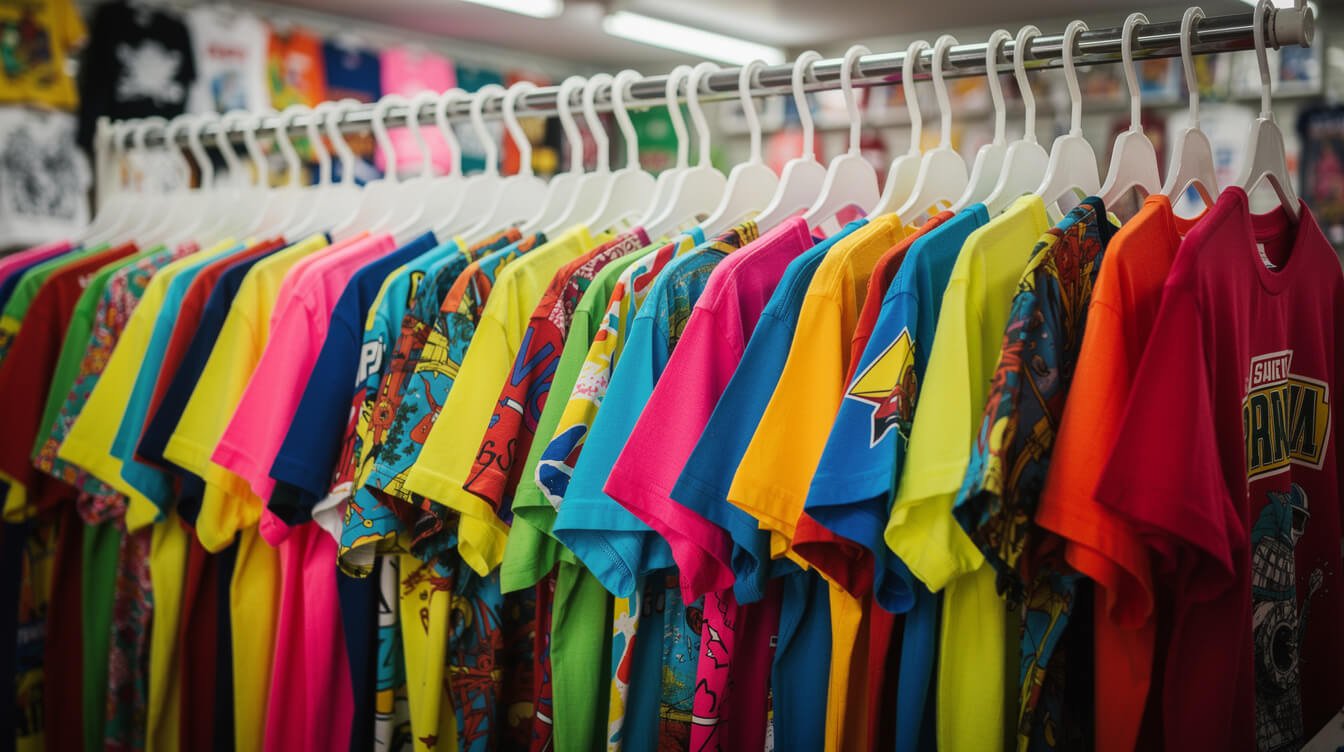
Tourist tells: palm-tree clip-art, fake tiki font, and other red flags
Once you know the tells, you cannot unsee them. Here is the field guide.
- The bamboo-tiki font. The single loudest giveaway. That fake-carved lettering is a costume of a font. No local design leans on it.
- Stock palm-and-sunset clip-art. If the graphic could be swapped onto a shirt for Cancún or the Bahamas by changing one word, it is scenery, not Hawaii.
- The state name as the whole design. HAWAII in giant letters is a label, not an idea. Locals wear the reference, not the nameplate.
- “Hawaiian” used to mean “anybody from Hawaii.” This one matters. Hawaiian means Native Hawaiian — Kanaka Maoli, a people and a culture. Someone who lives here but is not Native Hawaiian is a local or kamaʻāina, not “a Hawaiian.” A brand that blurs that line usually blurs the rest of the culture too.
- Sacred imagery used as decoration. Cultural or religious elements turned into a cute graphic are an instant no. If a brand treats the sacred as a pattern, it never understood the place.
- Plumeria-and-hula-girl everything. The tourist-brochure starter pack. Real island life is more specific and less staged than the postcard.
None of this is about gatekeeping. It is about fluency. A shirt that avoids every tell on this list is usually a shirt somebody who knows the islands had a hand in. That is the filter.
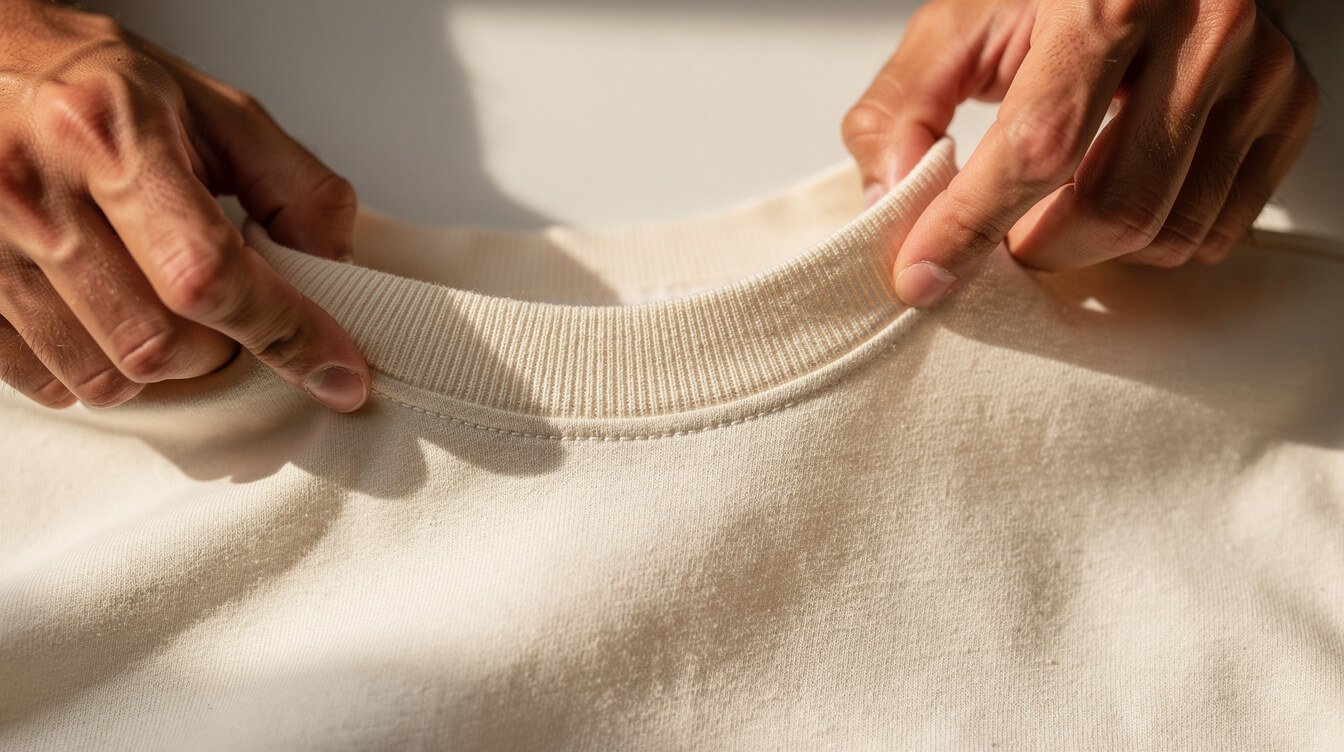
Fabric, fit, and print — the stuff you feel, not just see
Design gets all the attention, but half of whether a Hawaii tee earns a place in the regular rotation is physical. Island weather is the toughest quality-control lab there is — humidity, salt air, and a shirt you actually sweat in tell the truth fast.
Fabric. In this climate, weight and hand matter more than a big thread-count claim. A good tee is soft without being flimsy, breathes in the humidity, and does not turn stiff or see-through after a real wash cycle. Ringspun or combed cotton, or a smart cotton blend, tends to hold up. If a souvenir shirt already feels like a plastic bag on the rack, the ocean air is not going to improve it.
Fit. Island style runs relaxed — a tee you can wear from pau hana straight to the beach without thinking about it. Not tight, not a tent. Check that the shoulder seam actually sits on your shoulder and the length is not cropped weird. A shirt built for locals is built for real days, not a photo.
Print. This is where cheap shows up first. A heavy plastisol slab of ink cracks and peels after a summer of wear and washing. A good print — a quality screen print or a well-done direct-to-garment job — sits into the fabric, moves with it, and is still there next year. Turn the shirt inside out: clean, considered finishing on the inside usually means someone cared about the outside too.
You cannot always feel a shirt through a screen, so read the product page like a local reads a plate-lunch menu — look for the specifics, be suspicious of the vague.

IYKYK: the reference that earns the nod at the beach
Here is the real test, and it has nothing to do with fabric. Wear the shirt to a beach park on a Saturday. Does anybody who grew up here catch it — the small nod, the “eh, where you got that,” the laugh from someone three coolers over who read the reference in half a second? That nod is the entire product. Everything else is just the delivery system.
That is why the specific reference beats the pretty graphic. A sunset is nice; nobody nods at a sunset. But the exact snack from small-kid time, the number that means home, the inside line only someone who lived it would catch — that lands. It is recognition, the little chicken-skin moment of somebody made this for us, not for the airport gift shop.
It also has to be effortless. The best island references are quiet. They do not shout, they do not over-explain, and they never wink so hard they pull a muscle. If you have to stand there explaining your shirt, the shirt already lost. The whole appeal of IYKYK is that the right people get it instantly and the rest just see a clean tee — and that is fine, because it was never made for them.
Talk story with anyone who left the islands and they will tell you the same thing: the merch that means the most is the stuff that makes them feel seen. Not “I visited Hawaii.” I am from here, and I still am, even from three time zones away. A good shirt carries that quietly. That is the bar.
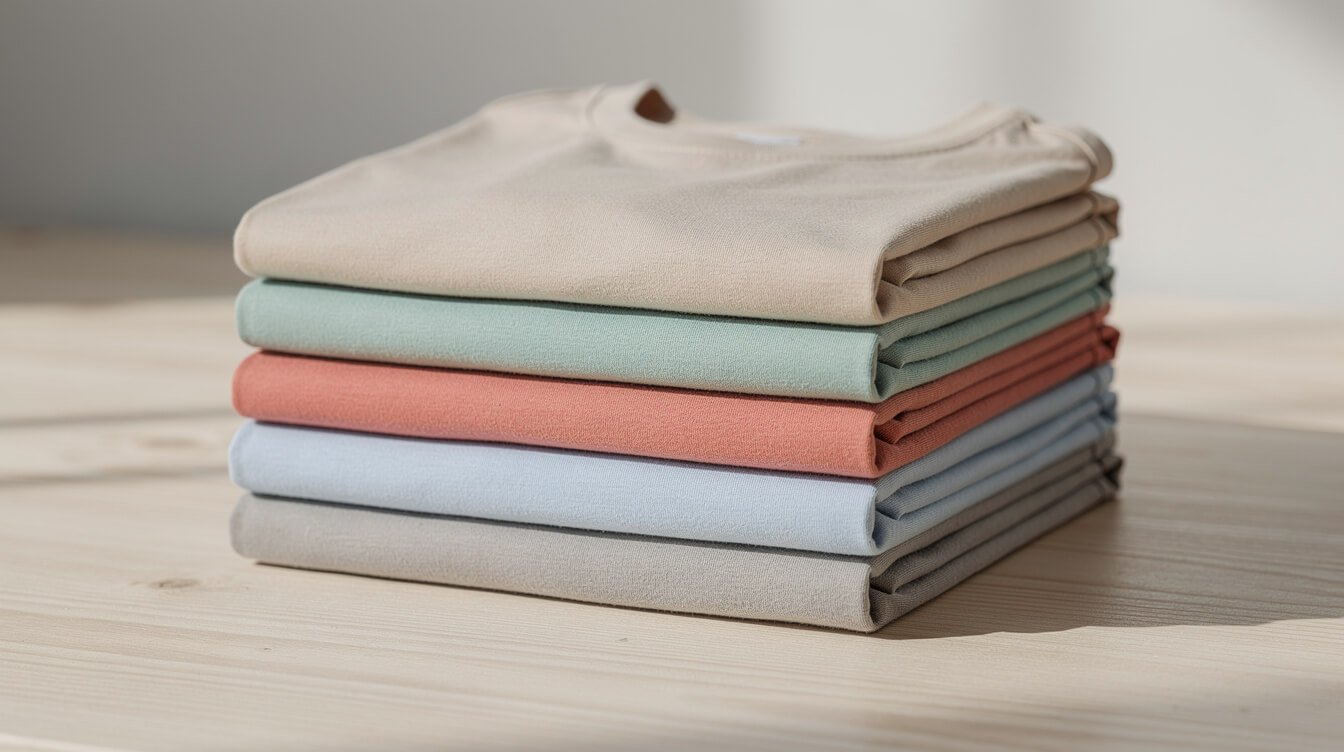
Born and raised, or island at heart — which design is for you
Not everyone who wears a Hawaii t-shirt grew up eating rice with every meal, and that is okay. There is a real difference between wearing the islands as identity and wearing them as affection, and a good design meets you honestly wherever you actually stand.
Born and raised. If you grew up here, you want the deep-cut reference — the one your cousins get and nobody at your mainland office does. This is the shirt that says the neighborhood, the school, the specific thing, no explanation offered. It is a little bit of a password. You are not buying Hawaii; you are repping home.
Diaspora — island at heart from a distance. If you moved away and miss it, the pull is different. You want the thing that closes the gap — the reference that puts you right back on that road, in that kitchen, at that beach. For a lot of folks on the mainland, the right tee is a piece of home you can put on. That is not a small thing. That is the whole reason to make it well.
Transplants and island-at-heart. Maybe you were not born here but you love the place and try to respect it. There is an honest lane for you too: wear your affection without cosplaying an identity that is not yours. The move is to celebrate island life and local humor, and to leave Native Hawaiian culture to the people it belongs to. Love the place, respect the culture, skip the costume — that is the whole etiquette, and locals clock the difference immediately.
The through-line is honesty. The best Hawaii t-shirts do not force everyone into the same story. They just refuse to be fake about it.
Hawaii t-shirts: the questions locals and transplants actually ask
A few things come up again and again when people are trying to buy the real thing instead of the souvenir. Here are the honest answers.
What makes a Hawaii t-shirt “authentic” versus touristy?
Authentic is about who it is made for and whether it gets the details right. A local-worthy tee carries a specific island reference — a snack, a phrase, a place — with no caption, treats Native Hawaiian culture with respect instead of using it as decoration, and spells any ʻōlelo Hawaiʻi correctly. Touristy is the opposite: a generic label (HAWAII in a fake tiki font over a stock palm), aimed at someone about to fly home. If it needs a footnote, it is the touristy one.
Is it disrespectful for a non-local to wear a Hawaii tee?
Not at all, when it is done with respect. Wearing your affection for the islands is welcome. The line to watch is between celebrating island life — local food, surf, pidgin humor, the shaka — and borrowing Native Hawaiian (Kanaka Maoli) cultural or sacred elements that are not yours to wear as a graphic. Love the place, respect the culture, skip anything sacred, and you are on solid ground.
What is the difference between “Hawaiian” and “local”?
Hawaiian means Native Hawaiian — Kanaka Maoli, an ethnicity and a culture with deep roots in these islands. Local or kamaʻāina means someone from Hawaii who may or may not be Native Hawaiian. It is a meaningful distinction, and a brand that uses “Hawaiian” to mean “anyone from Hawaii” usually gets the rest of the culture wrong too. Good Hawaii t-shirts keep the words straight.
What fabric holds up best in island weather?
Something soft, breathable, and honestly made — ringspun or combed cotton, or a good cotton blend, tends to survive humidity and salt air without going stiff or thin. Pair that with a print that sits into the fabric rather than a thick plastisol slab that cracks, and the shirt is still in your rotation next summer.
How can I tell before I buy, online?
Read the product page the way a local reads a menu: look for the specifics and be suspicious of the vague. Real fabric details, an honest description of the print method, and a design built on a specific reference are all good signs. Bright color and the word “authentic” with nothing behind it are not.
How we make the Hawaii tee we would actually wear
That is the whole standard we hold ourselves to at hawaii.top: we only make the shirt we would wear ourselves. Every design starts from a real island reference — the kind that earns the nod, not the kind that needs a caption. If it needs a footnote, it does not ship. If an idea drifts anywhere near sacred ground or the Hawaiian language, we slow down and get it right or we leave it alone, because respect for the culture and the ʻāina comes before any graphic.
Then we put it on a blank that survives island life — soft, breathable, built for a real day from pau hana to the beach — and print it so it is still there next summer. No bamboo font. No stock palm tree. No culture turned into a gimmick. Just the island detail, done right, for the people who catch it.
If that sounds like your kind of shirt, come look through the hawaii.top designs and find the one that gets the nod where you are from. Born and raised, or island at heart — there is one in there for you.
And if you want the next local’s guide when it drops, stick around and talk story. We are always working on the next one — the aloha shirt done right, the island-clothing breakdown, the story behind the 808. If you know, you know. Aloha, for real.