Best Beaches on Maui, Ranked by a Local (Not a West-Maui-Only Tourist List)
Ask a Maui local for the best beaches on Maui and watch the answer split in two directions at once. The West Maui crowd will point you to the postcard bays between Kaanapali and Kapalua — reef-protected, resort-lined, made for a lazy afternoon. The South Maui crowd will tell you those are pretty but soft, and that the real beach is the one with a shorebreak that can put you on your back if you are not paying attention. Both are right. That is the honest starting point for best beaches maui: this island does not have one great beach, it has two completely different oceans depending on which side you are standing on, and a real ranking has to say so instead of pretending Kaanapali and Big Beach belong on the same list for the same reasons.
Most “best beaches Maui” roundups online solve this by either sticking to West Maui — because that is where the resorts and the affiliate links are — or slapping a tag on every beach (family! snorkel! sunset!) without ever saying which one actually wins. This guide does neither. It ranks the whole island, West and South and the quiet East Maui stop most lists skip, using the three things a local actually checks before anyone else’s opinion: how the water behaves that day, whether you can actually park, and who is showing up with you.
How we ranked these beaches (the local criteria)
Three things decide a Maui beach day before the sand ever gets involved.
Water behavior. Maui’s coastline reads completely differently depending on where the swell is hitting. West Maui’s leeward bays are reef- and point-protected, so most days they stay glassy enough for a toddler to wade in without a second thought. South Maui, especially past Wailea toward Makena, faces more open ocean, and its beaches build real shorebreak — the kind of close-out wave that dumps swimmers straight onto packed sand. Neither is “better.” They are different tools. A ranking that does not separate them is not being honest about what you are walking into.
Parking reality. This is the detail every tourist blog leaves out and every local complains about. Kapalua Bay’s lot is small and full by 8:30am most days. Napili’s public spots are a handful of unmarked street spaces that disappear the second a rental car finds them. Big Beach’s dirt lot is enormous by comparison and still fills on weekends. If a guide does not mention parking, assume it was written by someone who took a shuttle.
Crowd timing. The same beach at 7am and 2pm is two different experiences. Tour buses and snorkel-cruise vans hit West Maui’s easy-access bays hard from mid-morning on. Get there before 9am or after 4pm and you get the beach the brochure photo promised.
One more thing before the ranking: bring reef-safe sunscreen, and mean it. Hawaii state law has banned the sale of sunscreens containing oxybenzone and octinoxate since 2021 because they bleach coral, and Maui’s reefs — especially the shallow snorkel spots on this list — are already stressed from warming water. A mineral (zinc oxide or titanium dioxide) sunscreen protects you just as well and does not cook the reef you came to see. It is a small thing, and it is exactly the kind of small thing that separates someone who respects the ʻāina from someone just passing through it.
With those filters set, here is the island, ranked top to bottom — plus the hidden one that never makes the tourist lists at all.
#1 — Kapalua Bay, and why it beats #2
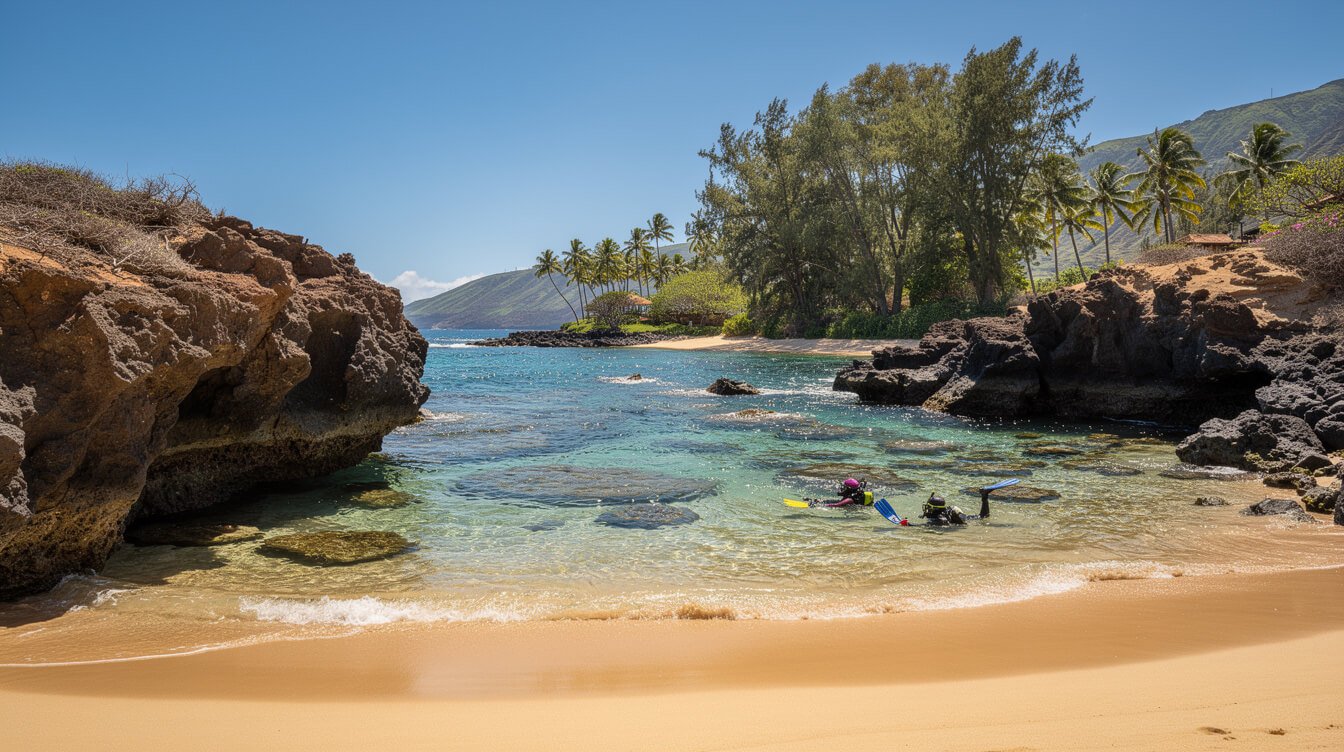
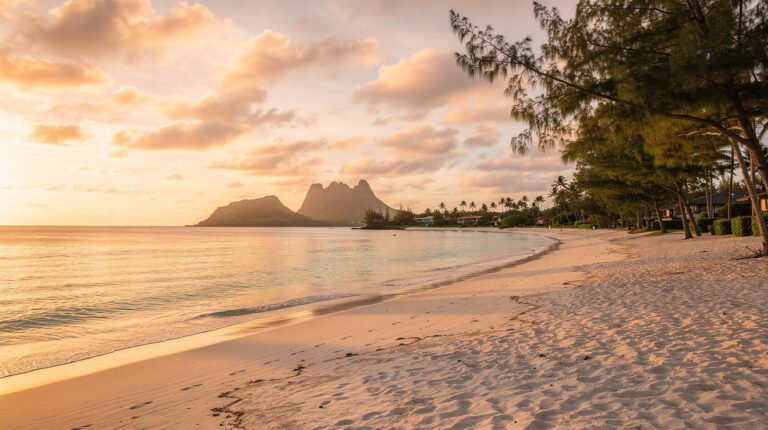
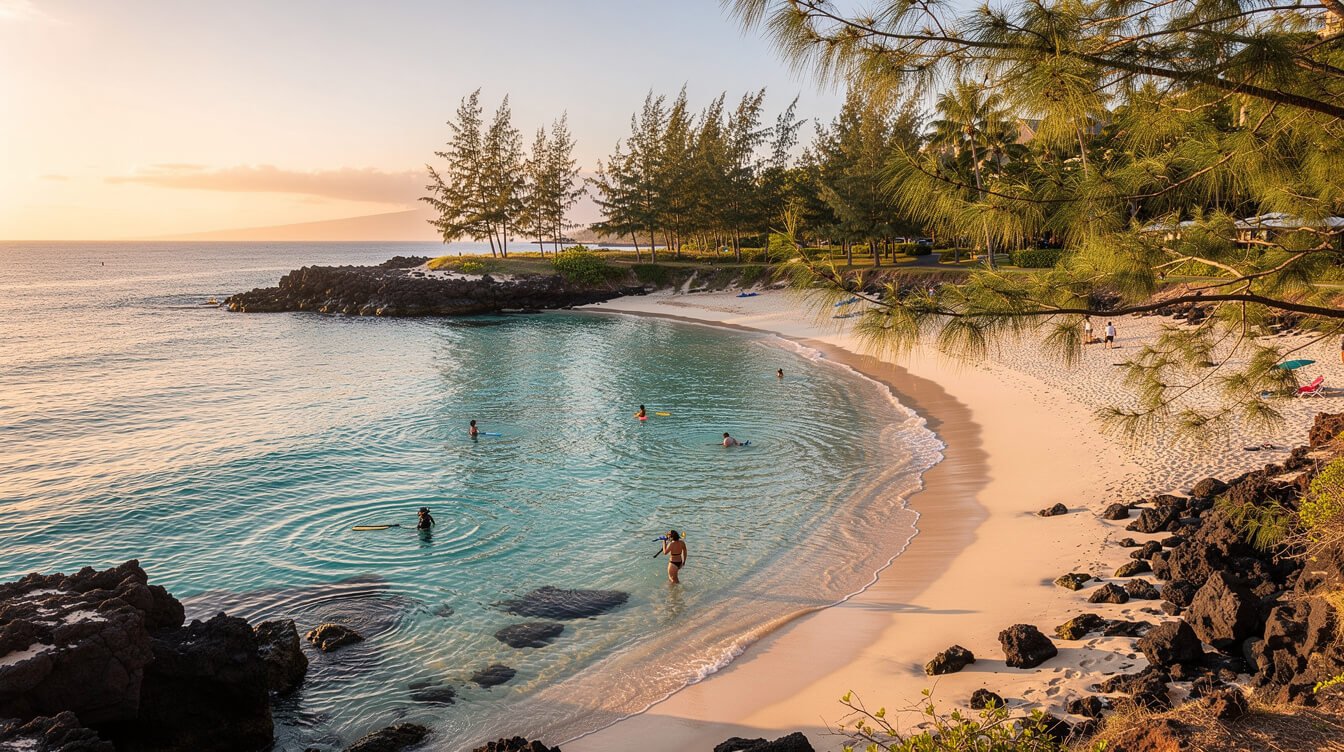
Kapalua Bay takes the top spot because it does the one thing no other Maui beach pulls off as completely: it is genuinely excellent at everything at once, with almost none of the trade-offs. Two rocky points wrap around a half-moon of soft sand and pin down water so calm and clear it reads like an aquarium — parrotfish, honu, the occasional reef shark cruising well clear of swimmers, all visible from the surface without a boat. It is one of the few Maui beaches where a nervous first-time snorkeler and a strong intermediate swimmer both have a genuinely great time in the same fifty yards of water.
Where Kapalua Bay beats Napili Bay, its closest rival at #2, comes down to two things: reef coverage and rock hazard. Kapalua’s points extend farther and block more swell, so it stays calm on days when Napili gets a little textured. And Kapalua’s entry is clean sand start to finish, while Napili has a scattering of rocks near its north end that catch people who wade in without looking down. Neither difference is dramatic — on a good day they are close to a tie — but stacked together, Kapalua wins the #1 slot by being the more forgiving bay on more days of the year. The trade-off: that small, perfect bay has a small, perfect parking lot. Roughly two dozen public spots, gone by mid-morning most of the year. Arrive before 9am or plan on the overflow lot up the hill and a five-minute walk down. There is no lifeguard tower here, so this is a self-supervise beach — the water earns its reputation for calm, but “usually calm” is not the same as “always calm,” so keep half an eye on conditions even on an easy day. No facilities beyond a rinse shower, so bring your own water and shade; the closest food is a five-minute drive to Kapalua’s small commercial center.
#2 to #4 — the West Maui runners-up
2. Napili Bay
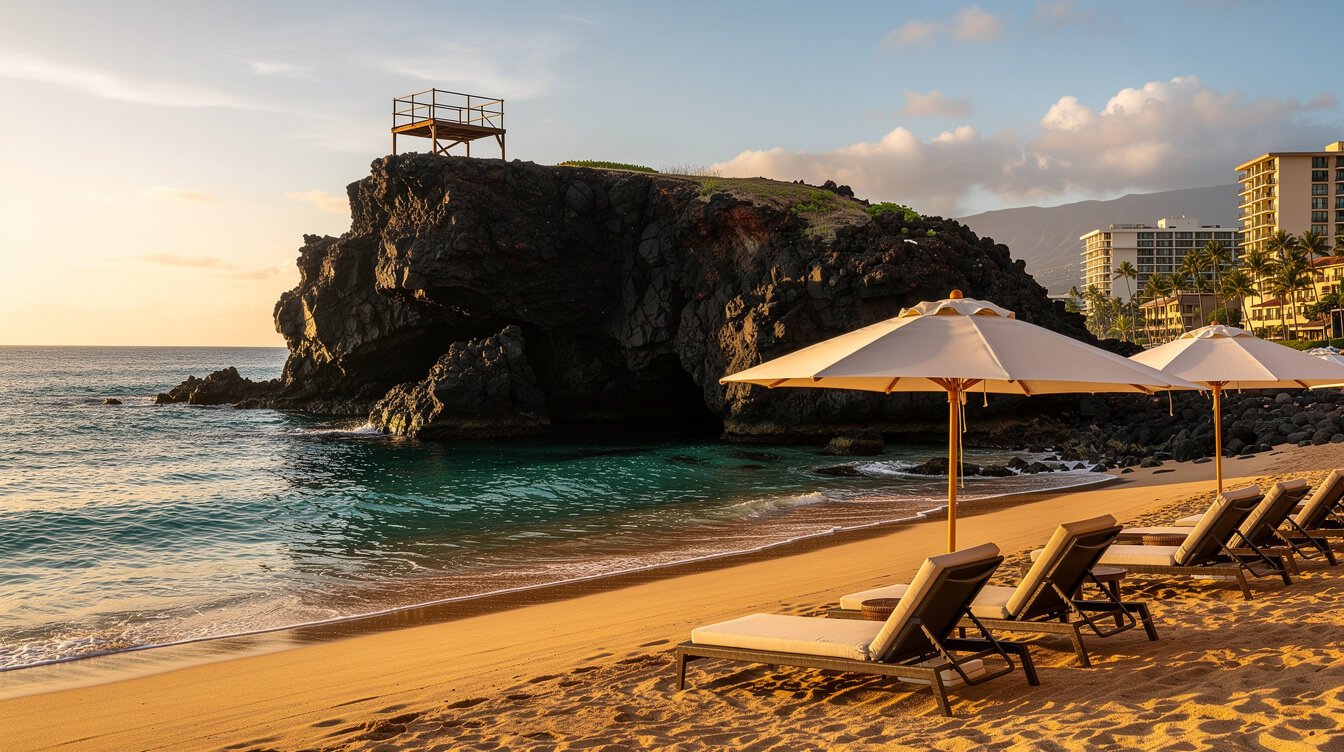
The closest thing to Kapalua’s twin, and for most visitors staying in the Kaanapali-to-Kapalua corridor, the more convenient one. Same crescent shape, same calm water most of the year, same reliable honu sightings near the rocks at either end. What keeps it at #2: that scattering of shallow rocks on the north side, and a parking situation that is arguably worse than Kapalua’s — a handful of unsigned street spots along Napili Place that locals know and everyone else circles for twenty minutes looking for. Go for the sunset. The bay faces almost due west and does not have a single high-rise blocking the horizon. Like Kapalua, there is no lifeguard on duty, and no public restrooms directly on the sand — the nearest facilities are back up at the condos, so plan accordingly if you are bringing kids for the afternoon.
3. Kaanapali Beach (Black Rock)
Three miles of continuous sand fronting the resort corridor, which is exactly what it sounds like — beautiful, easy, and busy. The move here is Puu Kekaa, the lava outcropping everyone calls Black Rock, at the beach’s north end. Snorkeling around its base rivals anything in West Maui, and if you time it right in late afternoon, you can watch the nightly torch-lighting and cliff-diving performance staged off the top of the rock — the site carries real significance in Hawaiian history, so enjoy the show with that respect in mind rather than treating it as just a photo op. Parking is resort-lot pricing unless you find one of the limited public stalls near the Sheraton; arrive by 9am on weekends or don’t bother. This is the one beach on this list with real lifeguard coverage and full facilities — restrooms, showers, food stands steps from the sand — which makes it the easiest full-day option on the island if convenience matters more than solitude.
4. Wailea Beach
South Maui’s answer to Kaanapali — a long, manicured stretch fronting the resort strip, with water calm enough for real lap-swimming distance and consistently good snorkeling around the rocky points at Ulua and Mokapu just to the north. It ranks below the West Maui three mainly because the small public beach-access lots (look for the blue shoreline-access signs between the hotels) hold maybe a dozen cars each and are gone before 9am. Once you’re parked, though, it is hard to beat for an all-around, low-drama beach day.
#5 to #7 — the South and East Maui picks
5. Makena Beach (Big Beach / Oneloa)
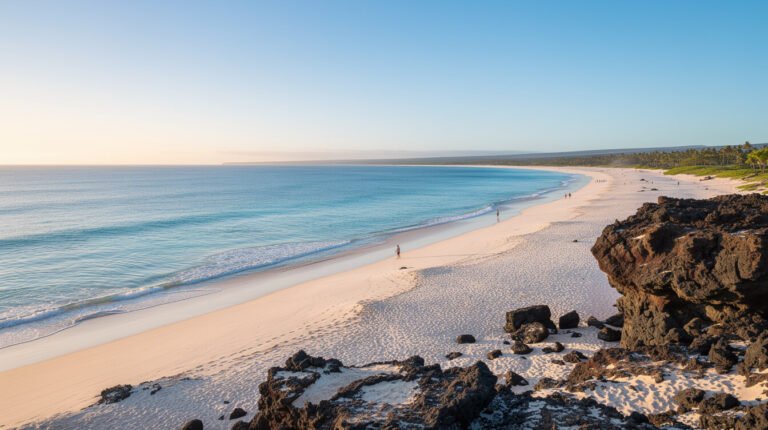
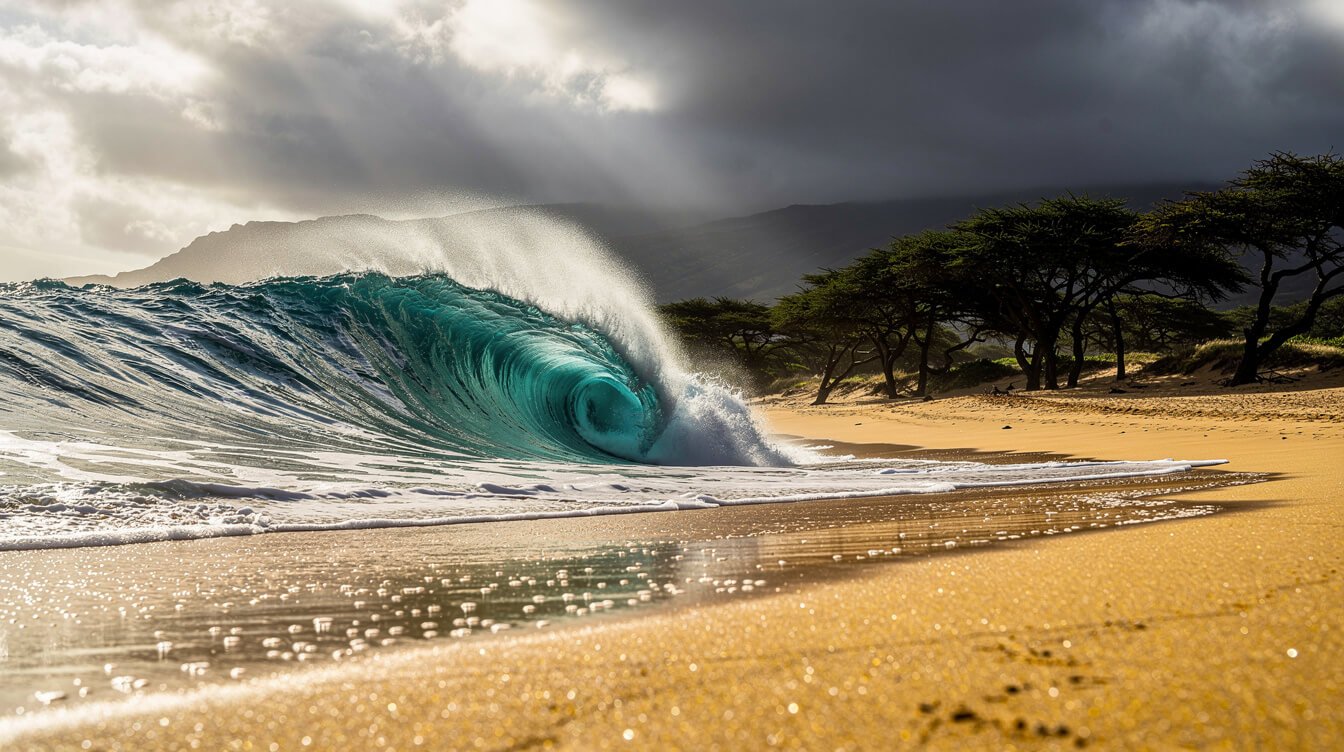
This is the most beautiful beach on Maui and also the one that sends the most people to Maui Memorial’s emergency room every year, and a real ranking says both things in the same sentence. Big Beach earns its name — nearly a mile of golden sand, wide open, backed by kiawe trees instead of hotels, with almost no development in sight. It is also known island-wide for a shorebreak that closes out hard and fast right at the sand, powerful enough to break wrists and necks on a moderate swell day, not just a big one. Locals watch the wave for a few minutes before ever stepping in, and so should you — if it is closing out with any real size, this is a beach for watching, not swimming. On a calm day, though, nothing else on Maui touches it. Big dirt lot, no shade near the water, arrive early for both the parking and the flattest water of the day.
6. Hamoa Beach
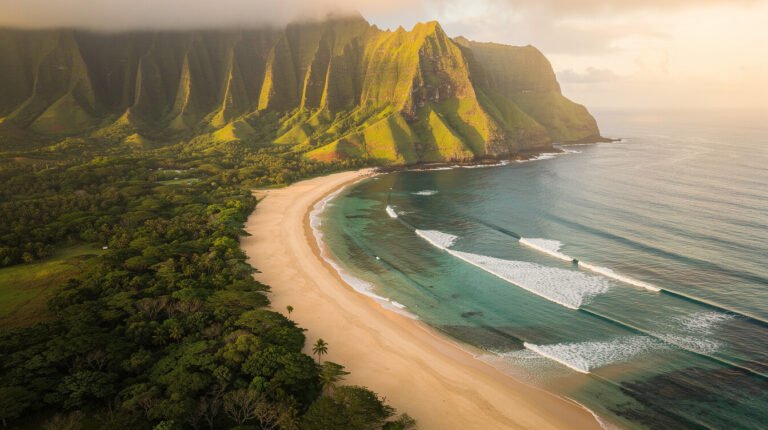
The reward at the end of the Road to Hana, and worth the drive on its own. Salt-and-pepper sand, a half-moon bay backed by jungle instead of resorts, and a shorebreak with real punch that makes it a legitimate bodysurfing spot when it is working — check conditions before you swim, since this stretch of East Maui gets far less lifeguard coverage than the resort beaches. Small lot, minimal crowds simply because of the two-hour drive required to get there, and one of the few Maui beaches that feels genuinely remote.
7. Oneuli Beach (Black Sand Beach)
A short walk south of Big Beach’s main lot sits Maui’s black sand beach — volcanic, coarse, and warm underfoot in a way white sand never is. It does not get the same crowds as its famous neighbor, partly because the sand itself surprises people expecting the postcard version, and partly because the access road is unpaved and easy to miss. Good snorkeling on calm days along the rocky south end, and one of the few spots on this list where you can have real quiet ten minutes from one of the busiest beaches on the island. No facilities at all — no restrooms, no lifeguard, no shade beyond a few kiawe trees — so treat it as an add-on to a Big Beach trip rather than a stand-alone destination, and bring everything you need with you.
The hidden pick locals actually use: Baldwin Beach Park
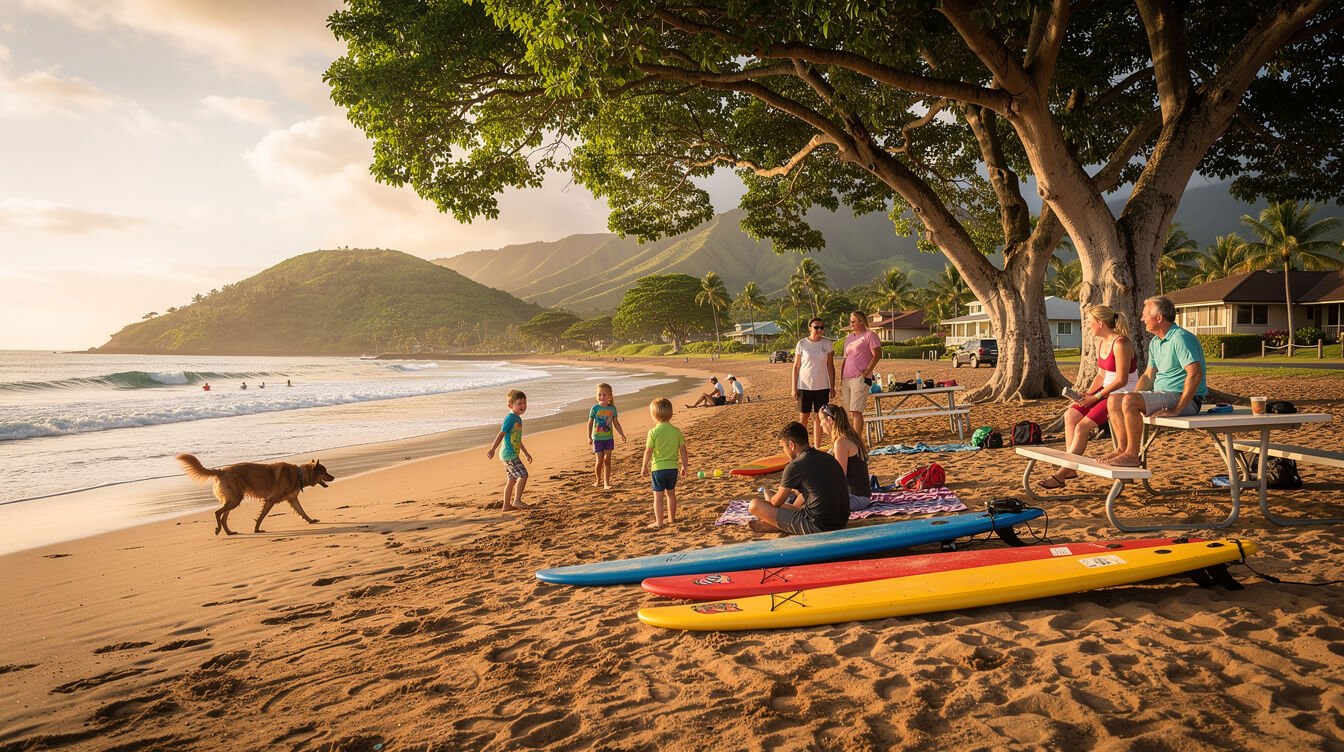
Every one of the beaches above shows up on somebody’s tourist list. This one mostly doesn’t, and that is exactly why Paia families treat it as their own backyard. Baldwin Beach Park sits just west of Paia town, a wide stretch of sand with a shallow, protected pocket at its east end that longtime residents call Baby Beach — calm enough for keiki to splash around in ankle-deep water while the main stretch runs a proper shorebreak that local kids grow up bodysurfing and boogie boarding. Full facilities, real parking (a real lot, not a scavenger hunt), and a crowd that is 90% local rather than rental cars. If you want to see how Maui actually spends a Saturday rather than how it markets itself, this is the beach. Just respect the shorebreak on the main stretch the same way you would at Big Beach — it is smaller, but it is not nothing.
Beach safety, real talk (shorebreak, currents, and the calendar)
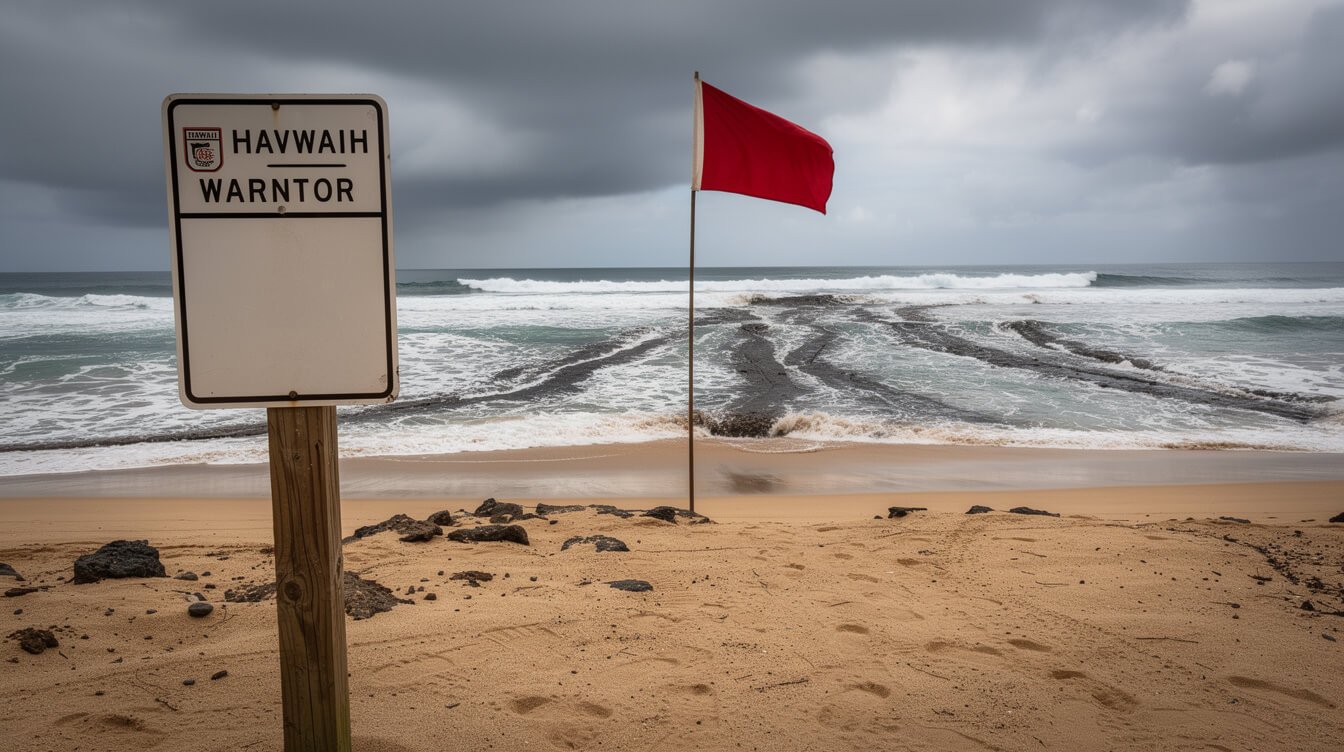
Two words matter more than any five-star review: shorebreak and season.
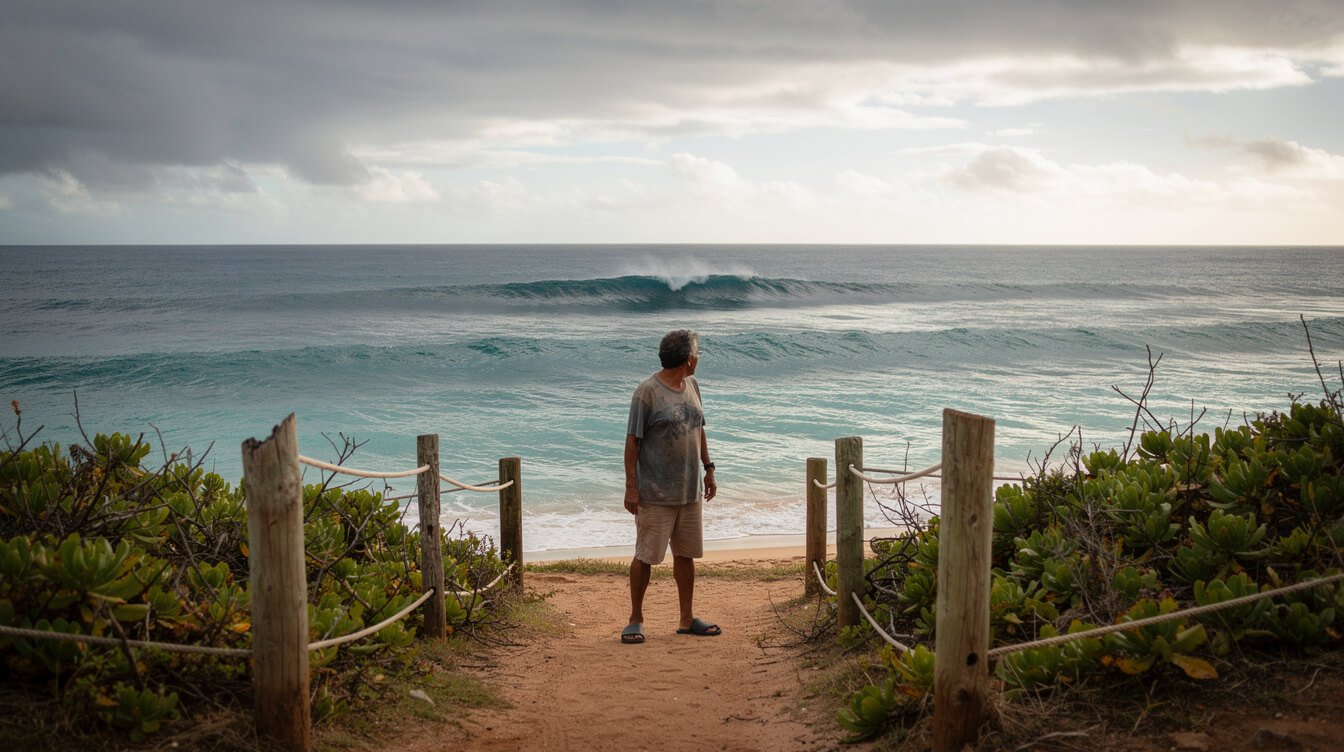
Shorebreak is a wave that breaks directly on the sand instead of offshore, and Maui has some of the most dangerous shorebreak in the state at Big Beach and, to a lesser degree, Hamoa and the main stretch of Baldwin. It does not need to look big to hurt someone — a chest-high shorebreak closing out on shallow sand can break a wrist or a neck. If you are unsure, watch ten minutes of wave sets before deciding to swim, and never turn your back on the ocean at any of these three beaches.
Currents show up as rip currents — narrow channels of water pulling straight out to sea, usually near rocky points or where a bay narrows. Kaanapali’s Black Rock and the points at Wailea and Napili are the spots to watch. If you get caught in one, the rule that saves lives is simple: do not swim against it. Swim parallel to shore until you are out of the channel, then angle back in.
Season flips the whole island’s risk profile. Roughly November through March, North Pacific swells push size and power into any north- or west-facing shore, while summer (May through September) generally calms the same beaches down. South-facing beaches like Wailea and Makena run the opposite pattern, picking up more energy from summer south swells. Check the daily surf and ocean safety report before you go, not the season in general — one day’s numbers matter more than the calendar.
One more calendar worth knowing: box jellyfish reliably show up on Maui’s south- and west-facing shores roughly eight to ten days after each full moon, riding the tide in to spawn. Locals check the lunar calendar the same way they check the surf report — county lifeguard stations post jellyfish advisory flags on the affected days, and it is worth a quick look before a swim at Wailea or Kaanapali during that window. A sting is unpleasant, not usually dangerous, but easy to avoid entirely if you know the pattern.
Lifeguard coverage is thinner than most visitors assume. Of the beaches on this list, only Kaanapali and a handful of the county-run beach parks (Baldwin included) have regular lifeguard towers. Kapalua, Napili, Wailea’s smaller pockets, Big Beach, Hamoa, and Oneuli are all self-supervise. That is not a reason to skip them — it is a reason to read the ocean yourself before you get in it.
FAQ: best beach on Maui for kids, snorkeling, and sunset
What is the best beach on Maui for kids?
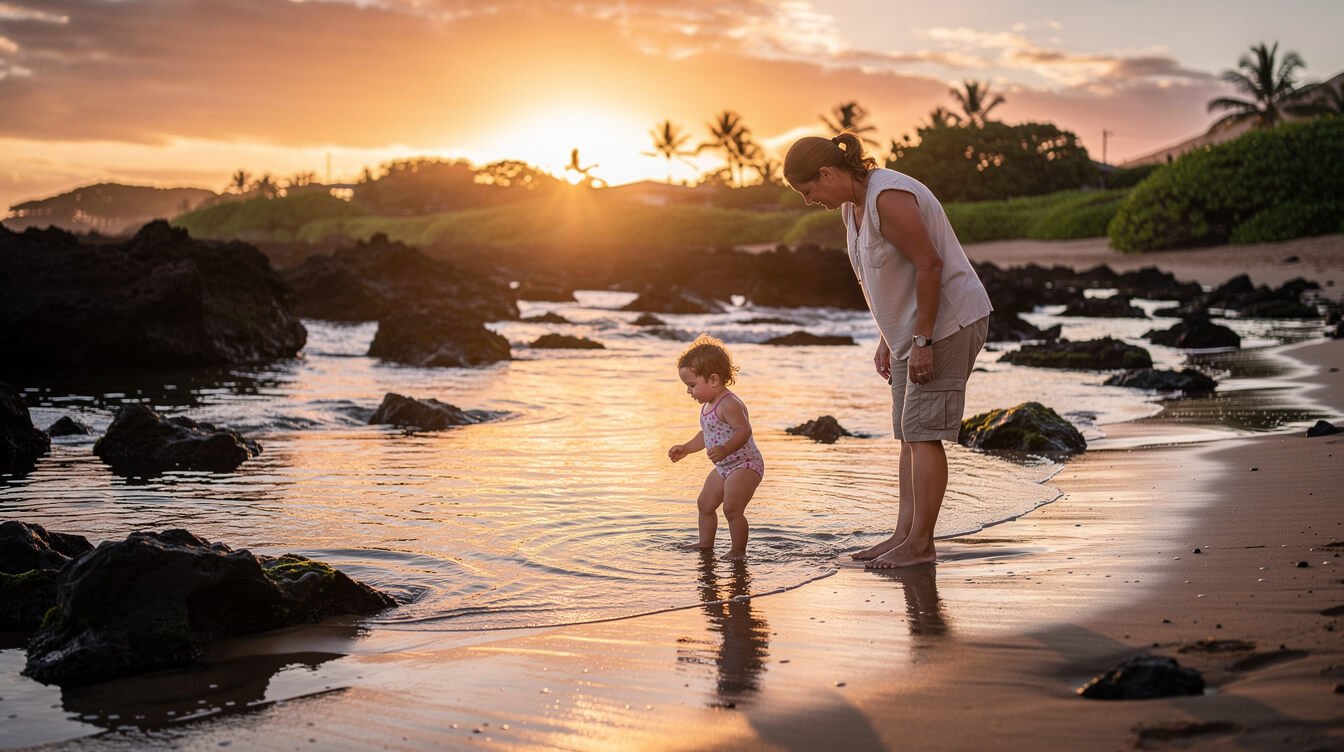
Kapalua Bay and Napili Bay, in that order, for the same reason they top the overall list — calm, reef-protected water with a gentle sand entry. For a spot with real local infrastructure (restrooms, shade, a lifeguard-adjacent crowd), Baldwin Beach Park’s Baby Beach section is the local answer.
What is the best beach on Maui for snorkeling?
Kapalua Bay for reliability, Black Rock at Kaanapali for variety and easy access, and Oneuli Beach’s south end for something quieter with genuinely good visibility on calm days.
What is the best beach on Maui for sunset?
Napili Bay, hands down. It faces nearly due west with no buildings breaking the horizon, and the crowd thins out right as the light gets good because most day-trippers have already left.
Is it safe to swim at Big Beach (Makena)?
On a calm day, yes, and it is one of the best swims on the island. On a day with any real shorebreak, watch from the sand instead — this is the single most common serious-injury beach on Maui, and the danger is the shorebreak itself, not the water further out.
Do I need a car to reach these beaches?
Effectively yes. Maui’s bus system does not reach most of this list on a useful schedule, and several of these — Hamoa, Oneuli, the West Maui bays outside the resort shuttle loops — are only realistic with your own transportation.
What sunscreen should I bring?
Mineral only — zinc oxide or titanium dioxide. Hawaii banned the sale of reef-harming chemical sunscreens (oxybenzone, octinoxate) in 2021, and at reef-heavy spots like Kapalua and Black Rock, what you put on your skin ends up in the water within minutes.
Final thoughts: pick the ocean, not just the sand
The real skill in choosing a Maui beach isn’t finding the prettiest one — every beach on this list photographs well. It’s matching the day’s ocean, and your own group, to the right stretch of sand: Kapalua and Napili when you want the water to behave itself, Big Beach and Hamoa when you want the real, wilder version of the island and you respect what that means, and Baldwin when you just want to spend a Saturday the way Maui actually does. Get that match right and every beach on this list earns its spot.
If this made you miss the islands more than you expected, that’s kind of the point. Take a piece of it home with you — browse the shop for designs made by people who actually know these beaches, not a tourist gift shop’s idea of them.
More island rankings, done the same honest way: our full statewide best beaches in Hawaii ranking, the best beaches on Oahu, the best beaches on the Big Island, and if you’re staying in the water, our honest ranking of the best snorkeling on Maui.