Best Beaches on the Big Island, Ranked by Someone Who Actually Watches the Lava Reports
Ask someone who’s never been and they’ll tell you the Big Island doesn’t really do beaches — too much lava, too much rock, not enough of that postcard white sand. Ask someone who’s actually spent a summer here and they’ll laugh, because the truth is better than the postcard: this island has white sand, black sand, and green sand, sometimes twenty minutes apart from each other, and a couple of those beaches didn’t even exist a decade ago. Best beaches big island is a real question with a real answer, and the honest version isn’t a flat list — it’s a ranking, because some of these are worth rearranging your whole day for and some are worth a quick stop on the way to lunch.
This is that ranking. Not resort-brochure “paradise” talk — real names, real access notes, and the straight truth about which ones are overhyped and which ones a local actually drives out of the way for.
How we rank a Big Island beach
Four things decide where a beach lands on this list: water you can actually get into (a gorgeous beach with a brutal shorebreak isn’t a beach day, it’s a lifeguard’s headache), what’s in the water (reef, honu, fish — or just sand and swell), how hard it is to reach (a mile of lava-rock trail changes everything about whether a beach belongs on a “best of” list or a “committed adventurer only” list), and whether the sand is even still there — because on this island, unlike anywhere else in the state, that’s a legitimate question. Punaluʻu is a Kaʻū institution and Hāpuna is the Kohala classic, but they get ranked on the same four things as everywhere else. No beach gets a pass for being famous.
One more thing worth saying up front: famous and best aren’t the same word here. A few of the beaches everyone photographs — Punaluʻu especially — earn their fame from what’s on the sand, not from how good the swimming is. We rank those honestly too, instead of pretending a great photo op is automatically a great beach day.
The top 3 — why #1 beats #2
1. Hāpuna Beach State Recreation Area
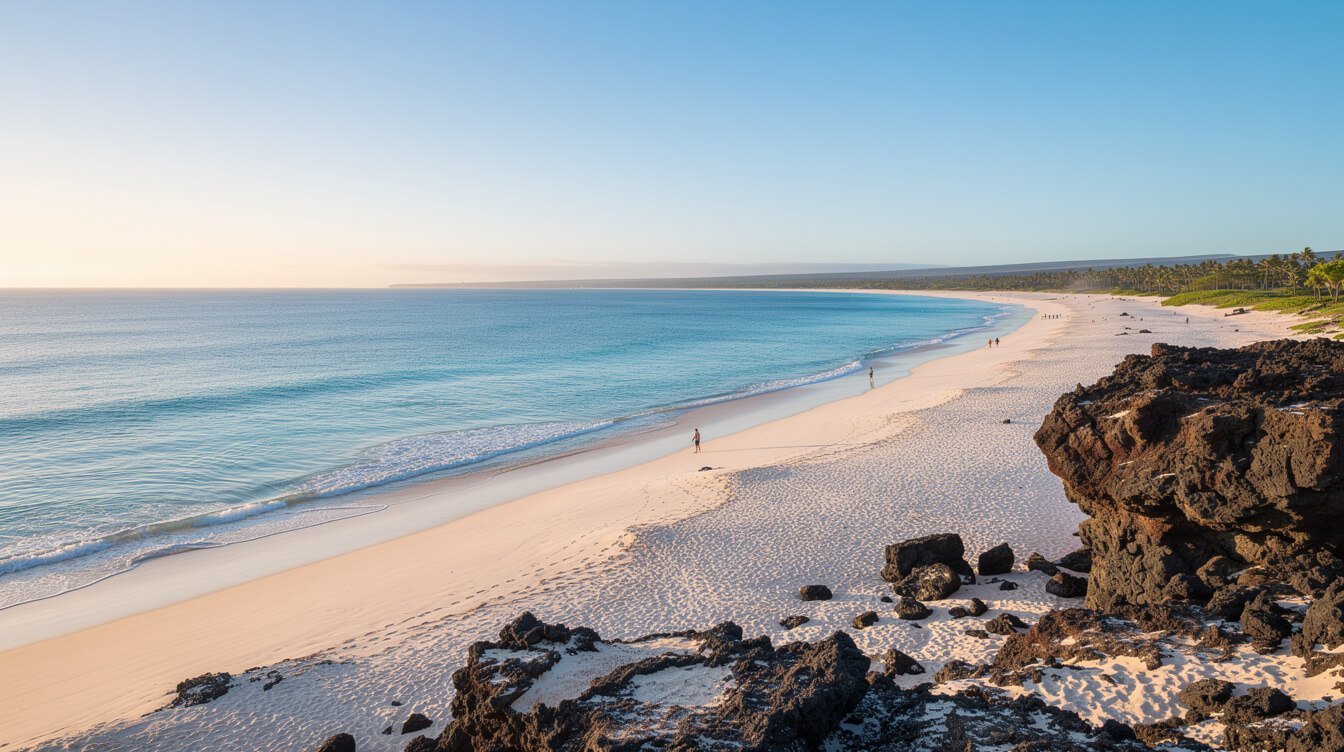
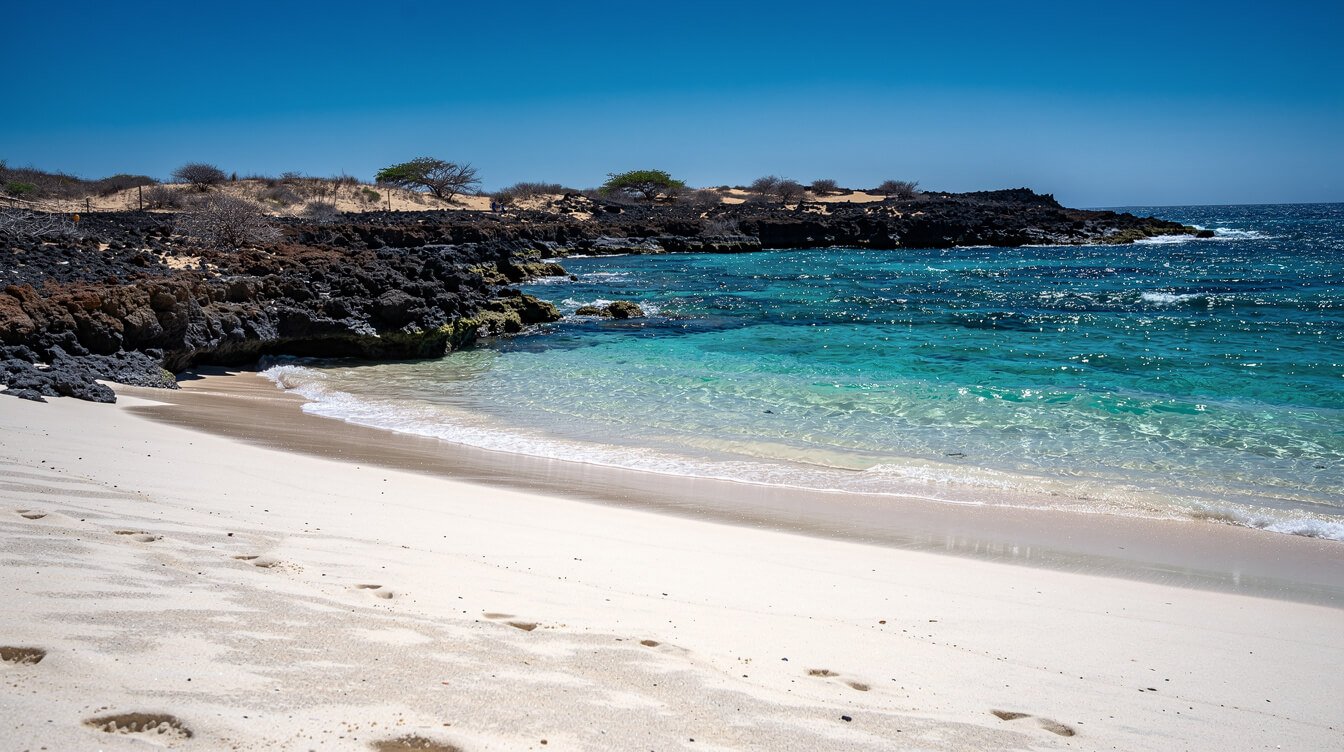
Hāpuna wins because it does the most things well at once: a half-mile of real, wide, white sand — the biggest on the island — with lifeguards, showers, a snack shack, and shade if you time it right. Summer mornings, the water lays down flat and it’s one of the best swimming beaches in the state, full stop. That’s the case for #1: it’s the rare Big Island beach that’s easy and genuinely great, no trade-off required.
The honest caveat: from about November through February, Hāpuna’s shorebreak turns mean — the kind that’s dropped more than a few tourists on their necks in the sand. Locals still go, we just read the surf report first and don’t turn our backs on the water. That’s the whole culture here in one sentence.
Practical notes: the state lot fills by mid-morning on weekends and holidays, so get there before 9am or plan on the overflow lot up the hill. There’s a $5 parking fee for non-residents and a small entrance fee, both worth it for the facilities. Pack a cooler — the snack shack is fine in a pinch but not something to build a whole day around.
2. Kahaluʻu Beach Park
If Hāpuna is the best all-around beach, Kahaluʻu is the best fifteen-feet-from-the-parking-lot snorkel on the island, and for a lot of locals that makes it #1 on any given Saturday. A shallow, reef-protected bay right in Kona town, thick with honu on a normal day and dense coral just past the sand — no boat, no tour, no $150 excursion required. It’s why Kahaluʻu doesn’t need to beat Hāpuna to earn a top-three spot; it’s just playing a different, equally good game.
It sits at #2 and not #1 for one honest reason: the entry is rocky, not sandy, and it’s not really a lay-out-a-towel-and-nap kind of beach. Bring reef shoes. It rewards people who came to look at fish, not people who came to work on a tan.
Practical notes: the county park lot is small and free, so go early — by 10am on a sunny weekend it’s already circling for spots. There’s a lifeguard tower and a grass lawn if you want a break from the water, and the summer months bring the calmest, clearest conditions for snorkeling.
3. Makalawena Beach
This is the one locals talk about like a secret even though everyone already knows about it. Turquoise water, soft white sand, a series of small coves instead of one long stretch — genuinely one of the best-looking beaches in the state. It lands at #3 for the same reason it stays uncrowded: there’s no easy parking lot handoff. You either hike about 20–30 minutes over a lava-rock trail from the Kekaha Kai State Park lot, or you bump a high-clearance 4WD down a rough access road first. No facilities, no shade structures, no bathroom once you’re out there. Bring everything you need and pack out everything you bring.
That friction is exactly why it’s not #1 — a beach this good should be an easy yes, and Makalawena makes you earn it. But if you’re willing to put in the walk, it’s arguably the most beautiful thirty minutes of effort on this whole island.
Practical notes: start at the Kekaha Kai State Park entrance off Highway 19 (look for the marked turnoff between mile markers 90 and 91), park at the main lot, and follow the coastal trail north past Mahaiʻula Beach — Makalawena is the next cove system after that. Go early to beat both the heat and the crowd, and bring more water than you think you need; there’s no shade until you’re standing in it.
The next tier — #4 through #7
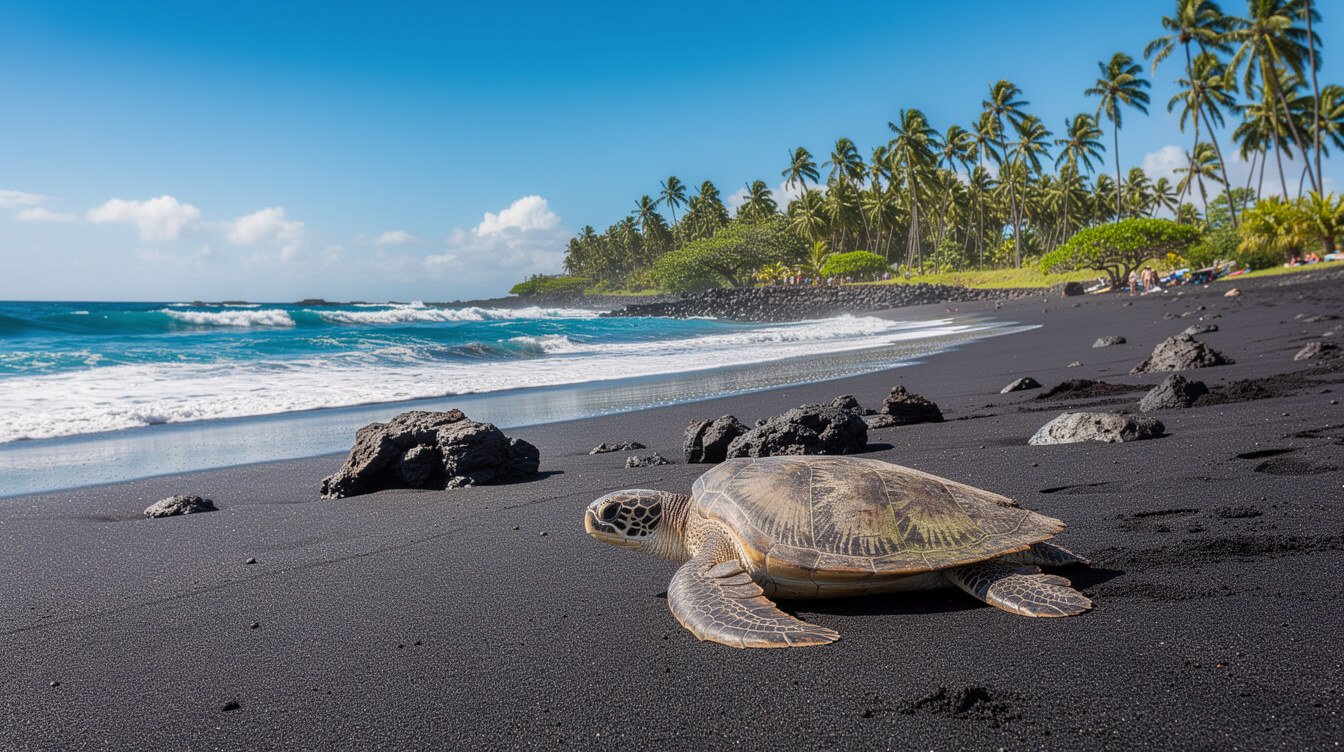
These four are all genuinely good, ranked here by the same rules — water, wildlife, access, honesty about the sand.
4. Kua Bay (Maniniʻowali)
A short, easy walk from a paved lot inside Kekaha Kai State Park gets you to water so clear it looks retouched. On calm days this might edge into the top three. The catch: high surf turns Kua Bay’s shorebreak sharp and shallow fast, and it closes the parking lot when swells get big enough. Check conditions before you commit the drive.
5. Magic Sands Beach (Laʻaloa)
A Kona-town bodyboarding spot with honu that show up like they’re on payroll, and a genuinely funny local fact: the sand at Magic Sands disappears entirely during big winter swells and comes back in spring, which is exactly how it earned the name. Small, easy, and a good “we only have an hour” beach.
6. Punaluʻu Black Sand Beach
The most photographed beach on the island, and the honu here have made it famous for a reason — you’ll almost always find a few hauled out on the black sand. It’s touristy, and the water isn’t great for swimming (rocky bottom, currents near the pond outlet), but it’s worth the stop for what it is: a real geology lesson and a real wildlife-viewing beach, not a swimming beach. Come to look, not to soak. There’s a free lot right off Highway 11 in Kaʻū, a shaded picnic area, and food trucks parked out front most days — easy to fold into a South Point or volcano day without going out of your way.
7. ʻAnaehoʻomalu Beach (A-Bay)
The convenience pick — calm, shallow, sandy, with easy parking near the Waikoloa resorts and old Hawaiian fishponds right behind the beach worth a slow walk. It’s not wild or dramatic like Makalawena, but if you’ve got young kids or you just want zero friction between the car and the water, A-Bay delivers every time. Rent a stand-up paddleboard or kayak right on the sand if you want to explore past the swim area, and go late afternoon if you want the beach to yourself once the resort day-trippers clear out.
Beaches made (and erased) by lava
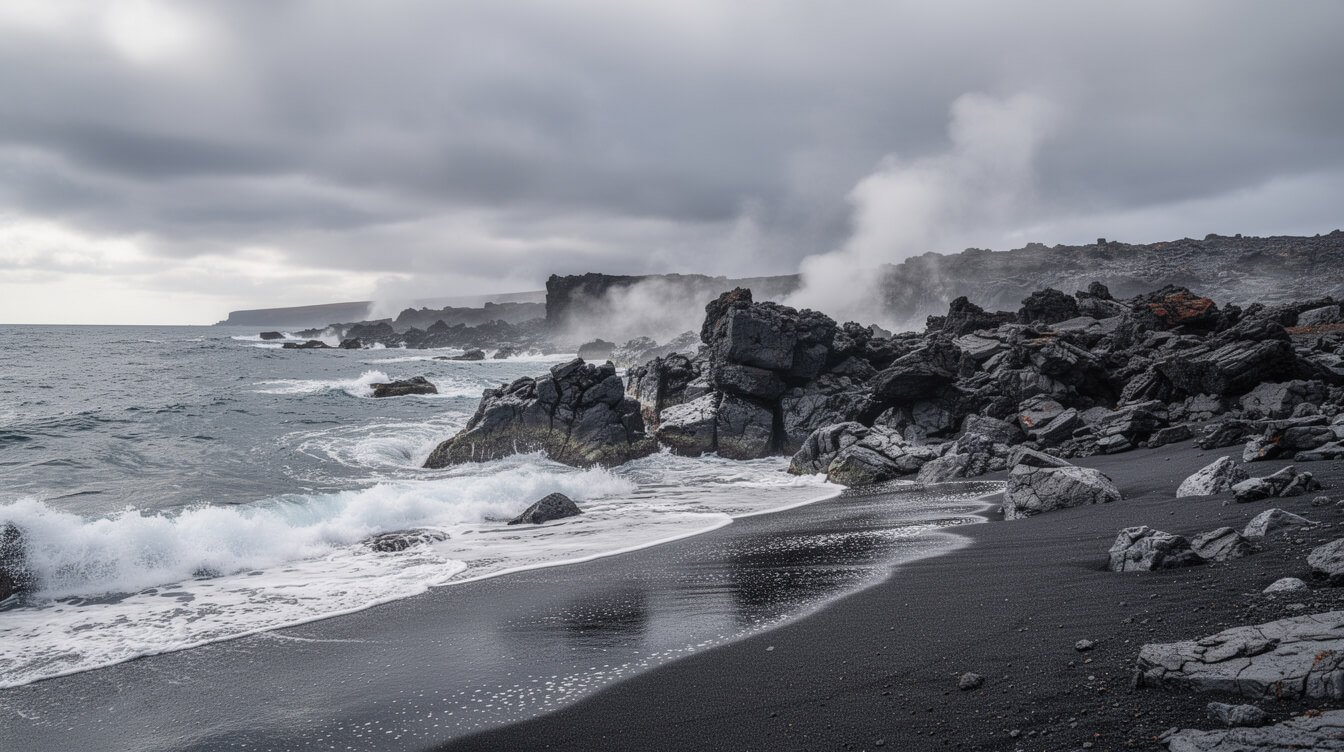
This is the part of the story most beach guides skip entirely, and it’s the most Big Island thing about Big Island beaches: some of them are younger than the people reading this post.
The original Kaimū Black Sand Beach — a postcard-famous, palm-lined black sand beach near Kalapana — was completely buried under roughly 50 feet of lava during the Puʻu ʻŌʻō and Kūpaʻianaha eruption in 1990, along with most of the town around it. What exists at Kaimū today is a new black sand beach, still slowly forming on top of that flow as the ocean grinds fresh lava rock into sand. It’s a real place to visit and a genuinely moving one, but it is not a swimming beach — steep drop-offs and no lifeguards. Go to walk it and understand what happened here, not to get in the water.
Then there’s Pohoiki, at Isaac Hale Beach Park in lower Puna — a new black sand beach that showed up almost overnight during the 2018 Leilani Estates eruption, when lava reshaped the entire bay and the boat ramp that used to be the area’s main launch point. Locals have quietly turned it into a surf and bodyboard spot since. Currents here can run strong and it’s remote, so it’s a look-first, ask-a-local-if-conditions-are-good kind of stop, not a casual family swim.
Neither of these makes the ranked top 7 — they’re not the best swimming or snorkeling in the traditional sense — but if you want to actually understand this island, they matter more than any beach on the list above.
Honu and reef respect: the etiquette that matters here
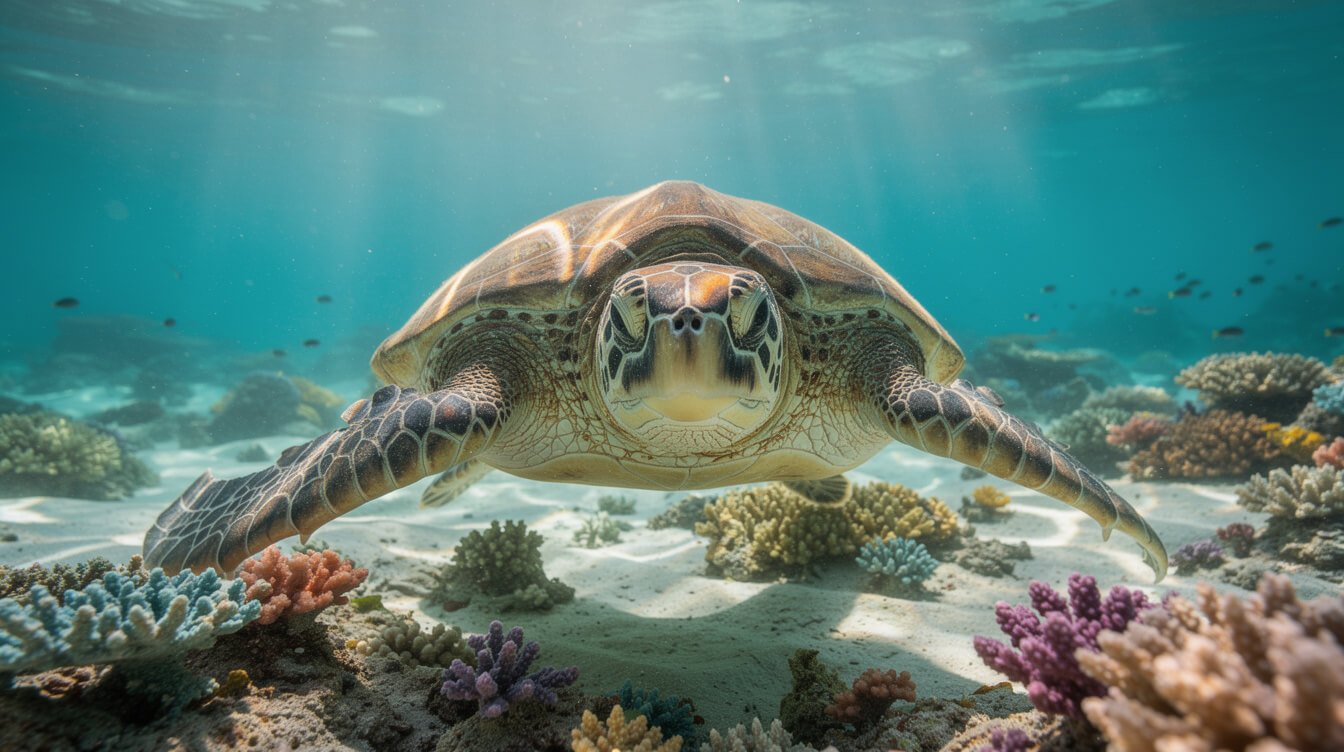
Green sea turtles (honu) haul out on Big Island beaches more than almost anywhere else in the state, especially at Punaluʻu and Kahaluʻu, and honu are a protected species under federal law. The rule is simple and non-negotiable: stay at least 10 feet back, no matter how still or how “used to people” a honu looks. Don’t touch, don’t chase for a photo, don’t crowd one to get your kid closer for a picture. If a honu is resting on the sand, walk around, not toward.
The reef deserves the same respect. Reef-safe sunscreen only — the mineral kind, not the chemical kind that bleaches coral — and no standing on reef even if it looks like solid ground; it’s a living thing that takes decades to grow back. And on the black and green sand beaches specifically: it’s illegal to remove sand or rock from Hawaiʻi’s state parks and beaches, full stop, no exceptions for “just one jar.” Leave the sand where it is.
Getting there: 4WD, hikes, and the green sand beach truck hustle
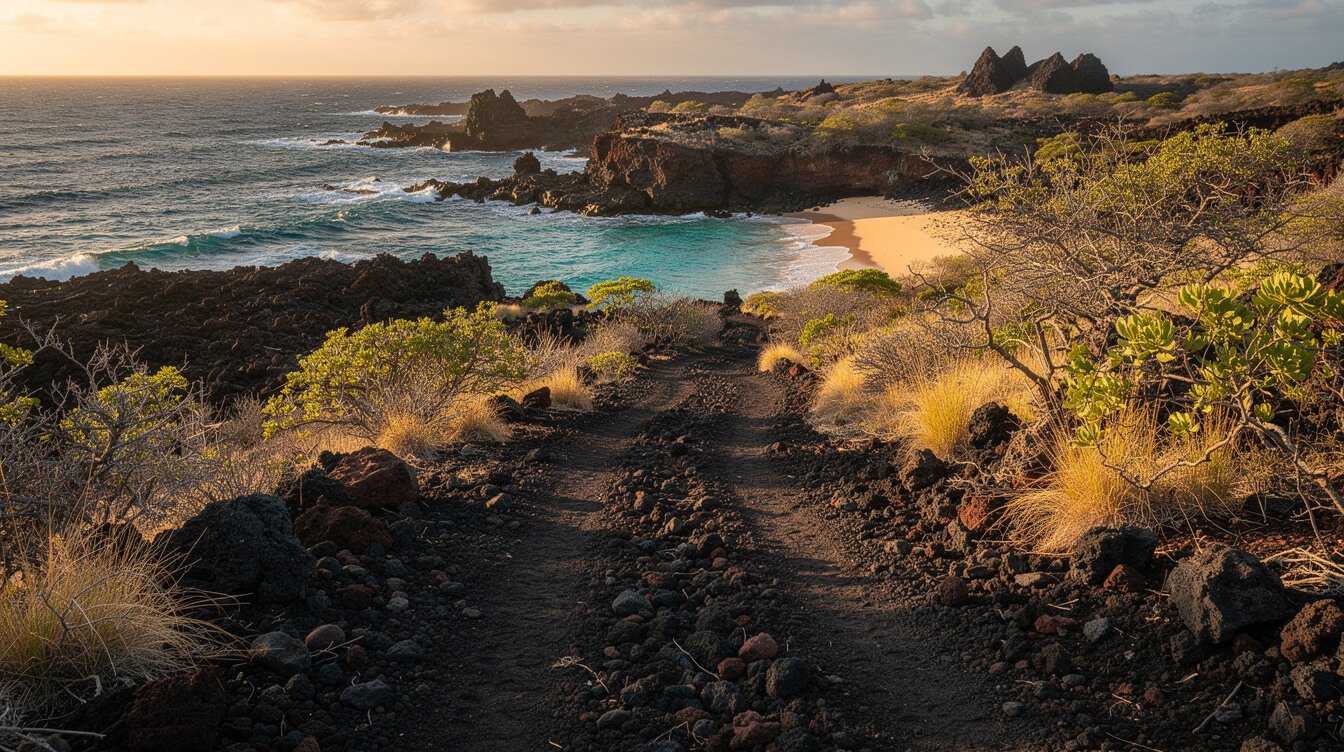
Most of the top 7 don’t need anything special — Hāpuna, Kua Bay, Punaluʻu, and A-Bay all have paved lots and a short walk from the car. Kahaluʻu and Magic Sands are both roadside-easy, right in Kona town.
Makalawena is the one that actually requires a plan: either the 20–30 minute lava-rock walk from Kekaha Kai State Park’s main lot, or a high-clearance 4WD down the rough coastal access road if the gate’s open. A regular sedan will get you to the hike-in option fine — just bring real shoes, not slippahs.
Papakōlea (Green Sand Beach), out past South Point, deserves its own honest note even though it didn’t crack the top 7: it’s a roughly 5-mile round-trip walk over exposed, windy terrain along the coast, or you can pay one of the local truck operators who run informal shuttle rides out and back for a cash fee. That truck system isn’t an official park concession — it’s a longstanding local hustle, and it’s fine to use, just bring cash and don’t expect a receipt. Either way, budget half a day and bring water, because there’s zero shade the entire route.
None of the Big Island’s beaches require an advance reservation the way Hanauma Bay does on Oʻahu — this island still runs on show-up-and-go. That could change as visitor numbers grow, so always check current park status before you drive out, especially after big surf or heavy rain.
Kid-friendly vs. experienced-only, straight up
Bring the kids: Hāpuna in summer (protected, lifeguarded), ʻAnaehoʻomalu (shallow and calm, easy parking), and Kahaluʻu if you keep them close — the reef is shallow but the entry is rocky, so supervise the walk in.
Go if you’re experienced and prepared: Makalawena and Papakōlea (both real hikes with real sun exposure and no facilities), Pohoiki (strong currents, no lifeguard), and any beach on this list during a winter high-surf advisory — Hāpuna and Kua Bay both turn genuinely dangerous when the shorebreak’s up, regardless of how calm they look from the parking lot.
Frequently asked questions
Is Punaluʻu Black Sand Beach safe to swim at?
Not really recommended. The bottom is rocky, currents run near the pond outlet, and it’s better treated as a wildlife-viewing and photo stop than a swimming beach.
Why is Papakōlea’s sand green?
The green comes from olivine, a volcanic mineral crystal eroding out of the cinder cone above the beach. It’s one of only a handful of green sand beaches on Earth.
Do I need a 4WD rental to see the Big Island’s best beaches?
No — six of the top 7 on this list are reachable with a regular car and a short walk. Only Makalawena genuinely benefits from 4WD, and even that one has a hike-in option for a standard car.
Is it true the Big Island doesn’t have as many beaches as the other islands?
It has fewer beaches per mile of coastline because so much of the shoreline is young, rocky lava rather than eroded sand — but the ones it does have are more varied than anywhere else in the state, and a couple of them are still actively forming.
What’s the best time of year to visit Big Island beaches?
Late spring through early fall (roughly May through September) gives you the calmest water across the board — that’s when Hāpuna, Kua Bay, and Makalawena are safest for swimming and snorkeling. Winter brings bigger surf, which makes the west-facing beaches more dangerous but also turns Honoliʻi and Pohoiki into local surf spots worth watching from the sand.
Final thoughts
The Big Island doesn’t hand you a beach day the way Waikīkī does — you’ve got to know which ones are worth the drive, which ones are worth the hike, and which ones are for looking, not swimming. That’s the whole point of ranking them instead of just listing them. Once you’ve got the real order, plan your week around Hāpuna and Kahaluʻu, save a full morning for Makalawena, and go stand at Kaimū at least once to understand what this island actually is.
If you’re back home missing the black sand between your toes, or you just want something that says you actually know this island and not the brochure version of it, take a look at the shop — designs made by people who watch the lava reports too. And if you’re planning the rest of the trip, we ranked the best beaches across all the islands and the best snorkeling on Maui the same honest way.